Control Resonant’s 16-Bit RPG Quest Turns Childhood Trauma Into a Playable Memory
Remedy explains how EarthBound and classic JRPGs shaped Control Resonant’s late-game story, built inside Northlight with custom Lua systems.
Spoilers for a late-game sequence in Control Resonant follow.
Control Resonant’s most striking late-game detour asks players to trade its third-person action for a small, 16-bit role-playing game. The shift does more than change the look and pace: it puts players inside Dylan’s fractured sense of reality and gives Jesse and Dylan’s childhood trauma a form they can inhabit. Remedy’s team says the sequence grew from a desire to make the player feel Dylan’s confusion, with classic Japanese RPGs providing the right language for memories that are funny, painful and strange at once.
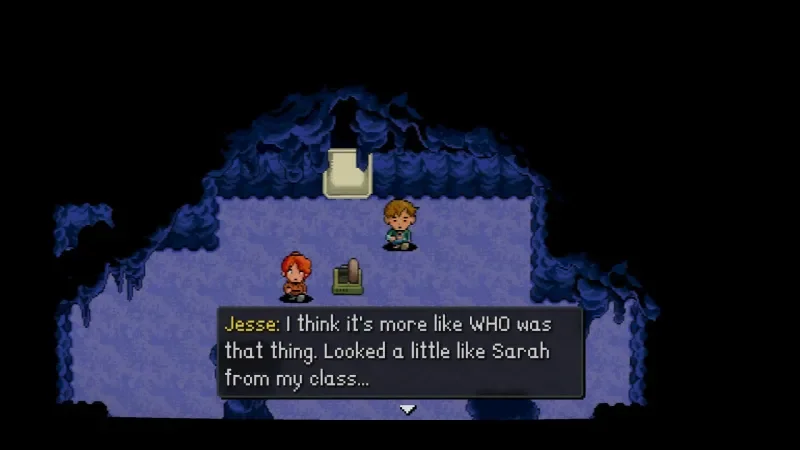
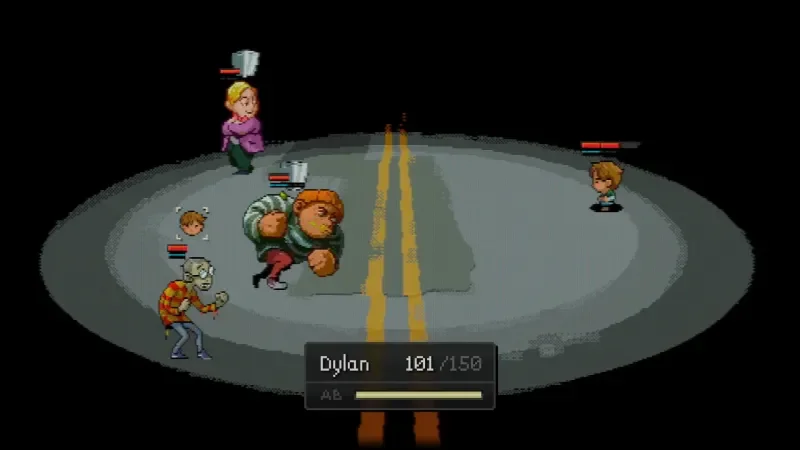
The sequence arrives shortly before the final confrontation. Its pixel art, overhead view and turn-based battles evoke the RPGs Jesse and Dylan might have played as children, with EarthBound among the clearest visual touchstones. Remedy’s developers describe the result as an unconventional way to revisit the siblings’ past, and a deliberate break in a game otherwise built around third-person action.
Breaking Dylan’s reality
Lead level designer Anne-Marie Grönroos says the sequence begins with the Hedron attacking Dylan’s mind. His reality comes apart, and he has to rebuild himself. Remedy wanted that rupture to reach beyond the story and affect how the game plays, letting the player experience some of the disorientation Dylan feels by breaking the fourth wall.
The initial idea was a text adventure: a return to an early form of videogame that could suggest Dylan’s world was devolving. But an Alan Wake 2 downloadable expansion had already used that approach. The team needed another form, one that could make the same point without repeating a recent Remedy project.
A separate suggestion helped unlock the answer. Months earlier, a level designer had proposed a side quest using JRPG pixel art, but it hadn’t progressed. Grönroos remembered that idea and proposed building the sequence as an old Final Fantasy-style RPG. It felt like a better fit for the games Jesse and Dylan might have known growing up, and the team responded enthusiastically. Feasibility remained a concern, though: Northlight was built for third-person action, and the proposed game-within-a-game would need to be made using tools not designed for it.
Old RPGs, a new story
Senior level designer Arhi Makkonen, who led the JRPG quest, traces its mood to the childhood wonder he found in games such as Final Fantasy, Breath of Fire, Chrono Trigger, Secret of Mana and Bahamut Lagoon, alongside Mother, known as EarthBound in the West. For Makkonen, the goal was to bring back the feeling that games could seem like magic. In Resonant, that sense of discovery becomes part of Jesse and Dylan’s shared past.
Mother also guided the visuals. Concept artist Juuso Anttila created the pixel art for the Rebuild quest, drawing on the game’s style to suit the sequence’s mysterious small-town Americana. Remedy also found a playful fit between the inspiration and the story’s “Not-Mother” reference. The homage, then, serves the setting and the joke as well as the nostalgia.
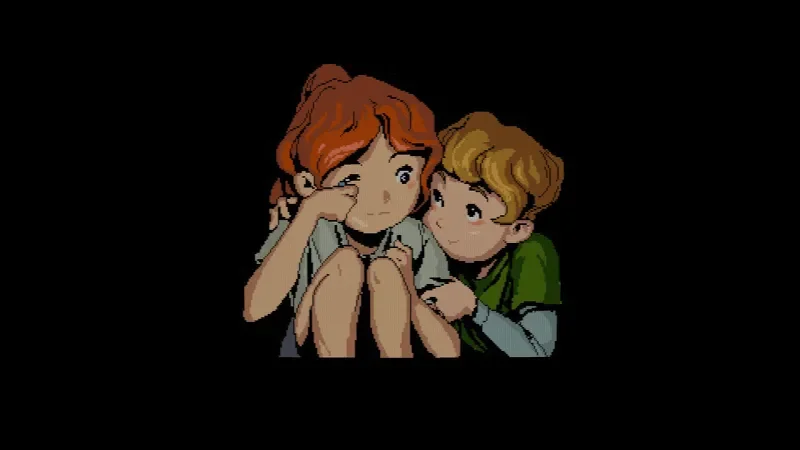
Young Jesse and Dylan as they appear in the sequence
A miniature RPG built by hand
Northlight’s limits shaped how the team made the quest. Makkonen says the game only appears two-dimensional: the JRPG version of Ordinary sits in a small, remote corner of the wider 3D world, viewed from directly above. The space is so compact that the full-size Dylan would barely fit there.
The quest runs in Lua. Game designer Tommi Saalasti built the underlying system, which Makkonen used to create the story. With no ready-made tools for a project of this kind, Makkonen hand-coded its details, from Dylan’s movement and turning to individual text boxes. He estimates that the Rebuild quest’s Lua script may contain as many lines as all the game’s other quests combined.
Technical constraints extended to the presentation. Animations could use no more than two frames, and some interface elements were made from static particle effects. The team had to find practical ways around a toolset meant for a different kind of game. Makkonen says the story gave them a reason to accept those compromises: the sequence could still work if its emotional force carried through the deliberately simple presentation.
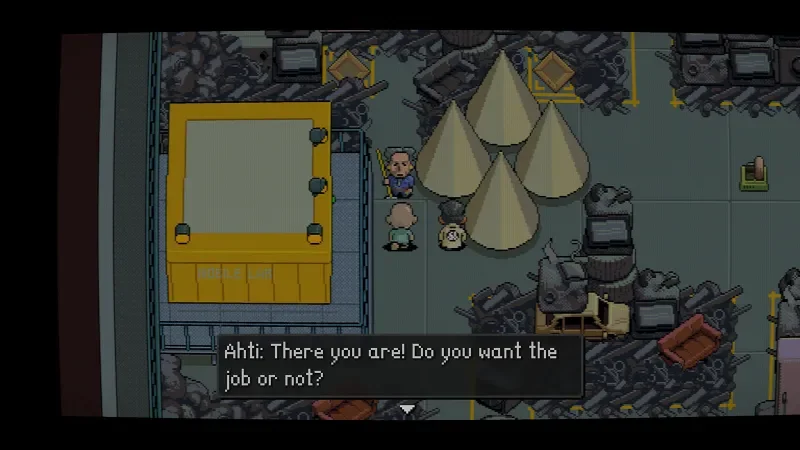
Everyone's favorite FBC janitor Ahti has a cameo appearance in the sequence
More than one kind of standout moment
Remedy’s history of unusual set pieces can make it tempting to expect one signature sequence in every game. Grönroos says the studio does talk about where those moments should land, but some grow in importance during development. Into the Sinkhole began without plans to make it a major set piece; as the team kept adding to it, the quest became something they wanted to give more space and attention.
Other moments are planned early. For Resonant, the team wanted several memorable sequences rather than a single showpiece overshadowing the rest, and Grönroos is pleased that players have different favorites. She points to Into the Sinkhole, Underpass Fault and the JRPG section as examples of moments that lean toward emotion and restraint, even as the game also includes large action set pieces.
That balance reaches the JRPG quest’s visual style. Grönroos says the developers did wonder whether pixel graphics might reduce its emotional impact. They chose to trust the writing, drawing on the way abstraction can leave room for players to interpret characters and connect with them. The simpler image can shape the feeling rather than weaken it.
Playtest divides, player choice and combat
The bigger worry was whether people who came for an action game would welcome a long RPG detour. Playtests split sharply: some players loved the sequence, while others disliked it. Remedy considered cutting it down substantially, then decided to keep its length while adding fast travel options and making parts skippable. Grönroos says there were more fans than detractors, and the team didn’t want to give up a section it cared about.
The battle system was designed around the story’s needs, not a large progression structure. Because the quest includes relatively few fights, Makkonen says the team didn’t need deep RPG systems. Combat instead helps tell specific parts of Dylan’s history: bullies torment him, he has his first fight against rats, and the story depicts his eventual abduction by the FBC.
Remedy refined the battles to keep them simple while giving players choices. Dylan can use a special attack to hit one enemy hard, while Jesse’s ability strikes every foe. Enemies can deal enough damage that defending matters when several target the same character. Those decisions give the encounters some texture without letting combat take over a story sequence whose main purpose is to show how the children remember their past.
A lightbulb quest takes a different turn
The interview also traces the unusual idea behind the Underpass mission, where lightbulbs and animation carry the action in unexpected directions. Grönroos says it began with a simple premise: make changing bulbs comically mundane, then add a paranormal twist. The cartoon man seen in the finished mission wasn’t part of the first plan.
Instead, the team initially imagined live-action workplace safety videos explaining how to change a bulb. As the quest progressed, their maintenance worker would seem increasingly aware of Dylan, eventually trapping him inside the video. The idea came from a one-hour workshop rather than a formal pitch, built through a back-and-forth about ritualistic bulb changing, sentient videos and Dylan becoming stuck in one.
Live action later proved unworkable, so the team switched to animation. Grönroos says the cartoon version turned out funnier than the original concept. Like the JRPG sequence, it shows how a Remedy set piece can emerge from a small, everyday premise and change shape as the team finds a form that serves it. The game’s most memorable moments, by this account, don’t all need to arrive as action spectacles: some work by making players inhabit an emotion, a memory or even a strangely serious task involving lightbulbs.