Queen’s Domain Runs Well on Steam Deck, With 60 FPS and Four-Hour Battery Estimate
Queen’s Domain pairs tough, exploration-led action RPG play with strong Steam Deck performance, though a 50 FPS cap may help manage power use.

Queen’s Domain already looks like a promising fit for Steam Deck players who enjoy demanding, exploration-led action RPGs. Freshly Baked Games LLC’s game has a Steam Deck Verified rating, and an early hands-on test found that it runs steadily on the handheld, with a few practical settings choices shaping the balance between smooth play and battery life.

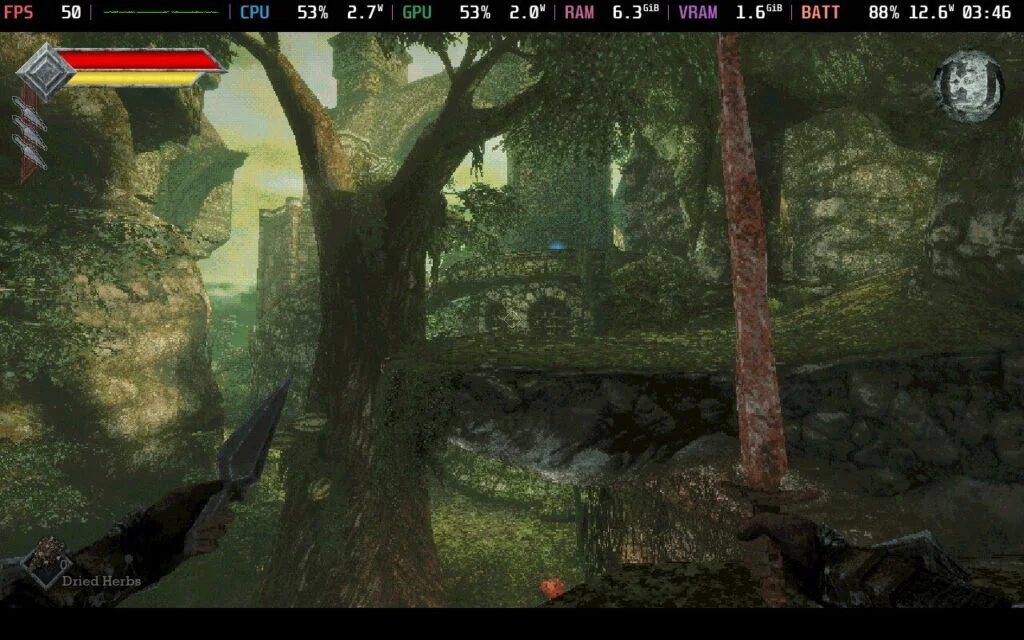
The game’s appeal starts with its approach to exploration. The writer compares its feel to the King’s Field games, blended with the more recent Dread Delusion: a retro-style action RPG built around dangerous spaces and discovery. That comparison points to the experience’s central promise: a world that expects players to pay attention, learn its rhythms, and find their own way forward.

There’s little handholding, and no map to fall back on. The island’s inhabitants pose a threat, so moving through its large environments calls for care rather than a quick dash toward the next marker. The original impressions single out the game’s visuals, sound design and combat as strengths, with small environmental details helping make the setting feel absorbing. For players drawn to older dungeon crawlers, that mix of atmosphere and friction may be the main draw.

Strong handheld performance, with a power tradeoff
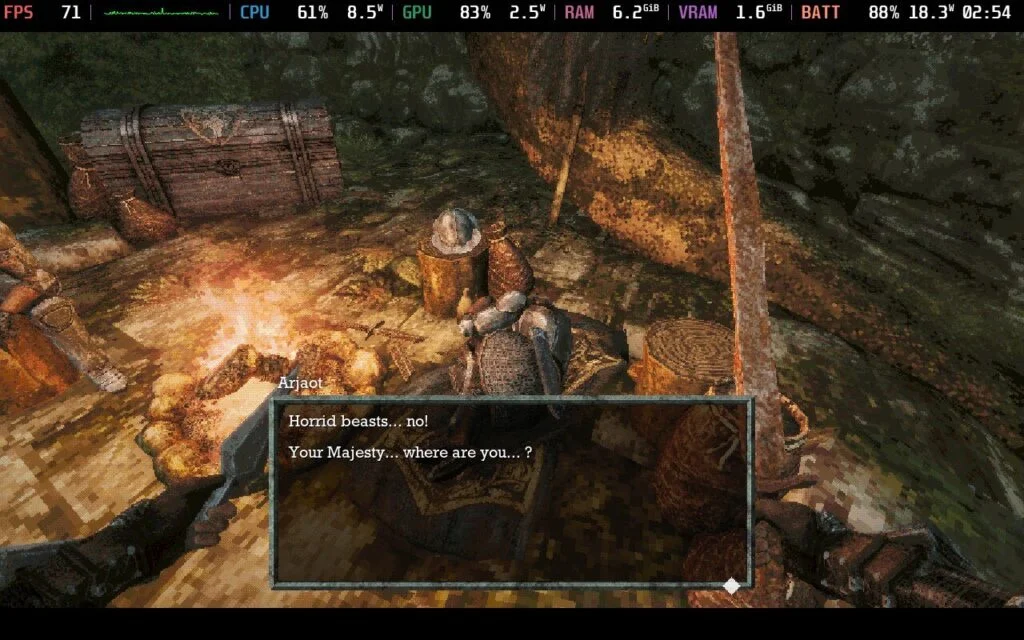
On Steam Deck, the reported results are encouraging. The game maintained a steady 60 frames per second during the early test, despite its sizable environments and long draw distance. That performance comes with a cost: the writer recommends keeping the Deck’s TDP at its native setting to help maintain stability, and notes that running at 60 FPS draws considerable power.

A 50 Hz refresh rate and 50 FPS cap offered a more battery-conscious option. In the opening areas, the test measured an average draw of 13 watts and estimated roughly four hours of battery life. That figure is an early estimate from the opening stretch, so it shouldn’t be treated as a guarantee for every area or play session. Still, it gives portable players a useful starting point: the game can run at 60 FPS, while a lower cap may make longer sessions more practical.

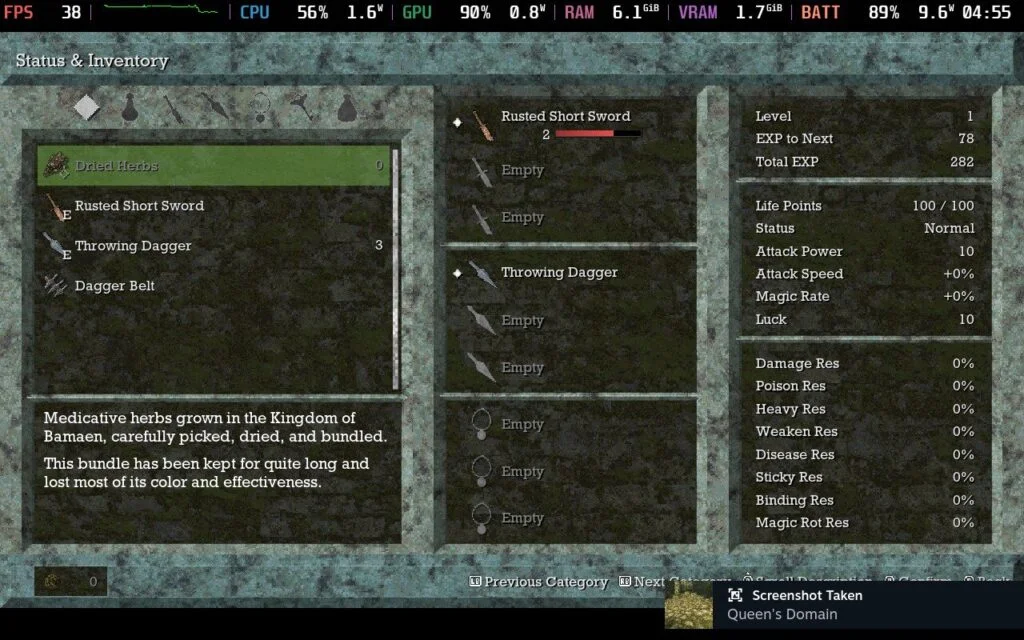
Settings are fairly limited, according to the test, but resolution scale and retro resolution provide two ways to adjust the image. The game also has full controller support from the outset. Its settings menu doesn’t include interface scaling, yet the reviewer found the on-screen text readable without it. Those details matter on a handheld, where legible menus and controls that work without setup can make the difference between a quick session and a fiddly one.
An early read, not a full review
The impressions come from the game’s opening portion. The writer received a review code but says a full review will take longer, in part because dungeon crawlers aren’t a genre they find easy. That caveat matters: the current assessment speaks to how the game runs and feels early on, rather than its full length or how its systems develop later.
Even at this stage, the combination of old-school difficulty, exploration and polished presentation has made a strong impression. The writer describes Queen’s Domain as a King’s Field-era RPG with a considerable degree of polish, and says they’re enjoying what they’ve played so far. For players who want a game that asks them to navigate without constant guidance, that early enthusiasm is a useful signal—though the punishing approach won’t suit every taste.
Queen’s Domain is available on Steam for $19.99 at full price. Its Verified rating, controller support and steady early performance make it an appealing candidate for handheld play, while the 50 FPS option offers a sensible place to start for players watching battery use. The larger question is how the game’s challenge and exploration hold up beyond the opening hours; that will need a fuller playthrough to answer.