Eternal Anima Preview: Reading Enemy Moves Makes Every Turn Count
Marvelous’ time-bending RPG pairs visible enemy actions with timeline-based combat, letting smart attacks interrupt foes and reshape each fight.
Platforms: PlayStation 5, Xbox Series X/S, PC
Publishers: XSEED Games, Marvelous Games
Developer: Marvelous Inc.
Release date:
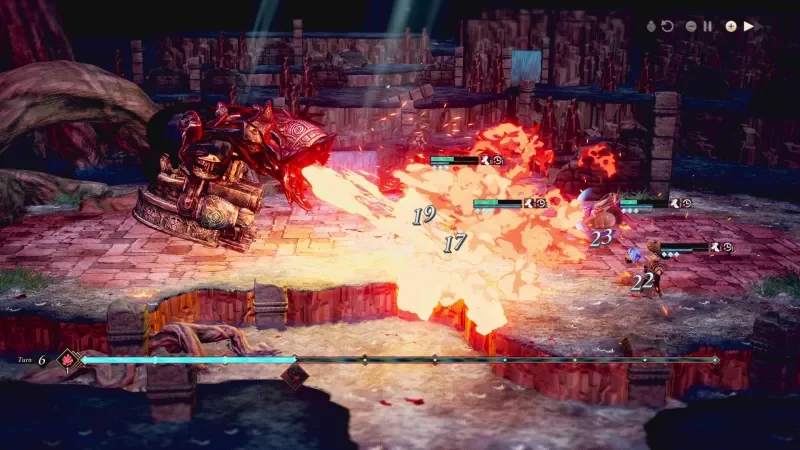
Eternal Anima’s standout idea is clear in battle: every enemy move is visible, and the player can use that information to rearrange the turn order. In roughly an hour with the RPG at Marvelous Inc.’s Tokyo office, I found its combat more absorbing than its familiar turn-based foundation might suggest. The appeal isn’t simply landing bigger hits. It’s predicting how the fight will develop, then disrupting that plan.
The game takes place in a flooded world where Urvis Ael remains the last bastion of civilization. Its inhabitants are discouraged from seeking change, but Wade, the protagonist, believes life could be better. His journey begins with a power called Psychometry, which lets him examine the past, witness memories and inherit abilities and classes that can be used in combat.
Every enemy move is on the timeline
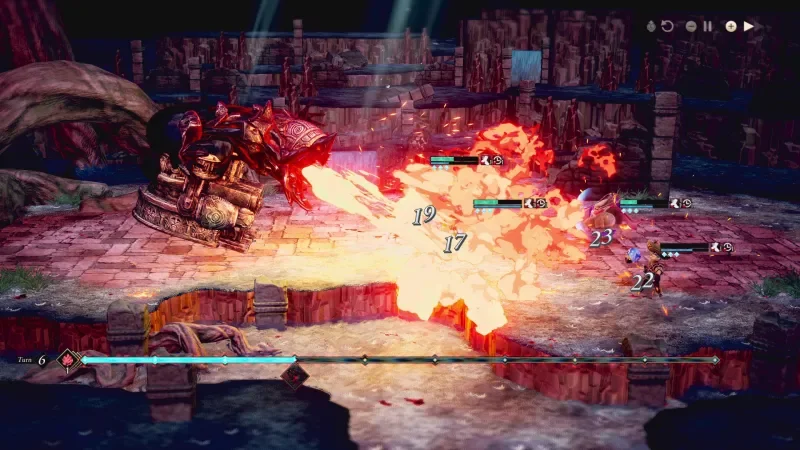
Wade also has Future Sight, a combat ability that reveals what enemies will do on each turn. The interface shows their upcoming actions, intended targets and expected outcomes. Each ability has a speed that determines where it appears on the timeline at the bottom of the screen, so players can weigh a move’s effect against when it will land.
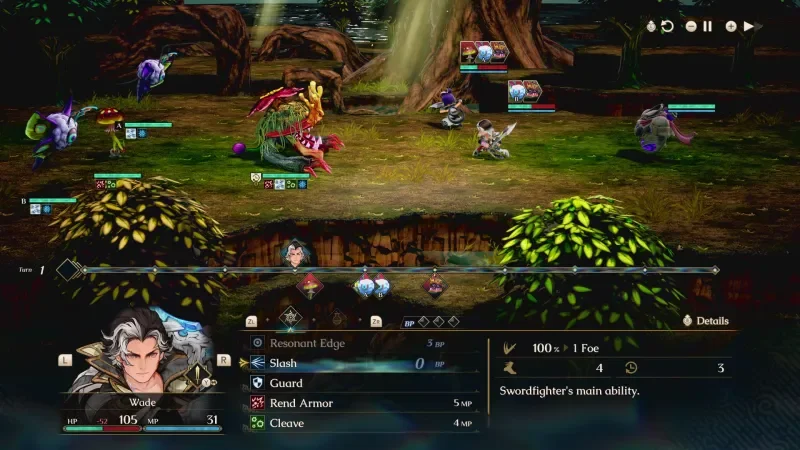
Attacking an enemy’s weakness with Wade or another party member pushes that enemy’s preselected action farther back in the turn order. A well-timed strike can delay a foe long enough to defeat it before it attacks. Against larger opponents, repeated disruption can knock them off the timeline entirely. This Break cancels their action and gives the party another round to press its advantage.
That makes each turn a small tactical puzzle. Players can see the danger coming, but they still have to choose which threat to delay, which weakness to exploit and how to spend the time they gain. The system rewards planning: a move’s value depends not only on its damage, but on how it changes the sequence of events.
The result feels distinct from a typical turn-based exchange. The player chooses a course of action, then watches the fight play out. That distance gives the battles a sense of command, as if Wade’s party were pieces on a board. When a plan works, the satisfaction comes from having read the timeline correctly and steered the enemies into a worse position.
A striking world with a different character style
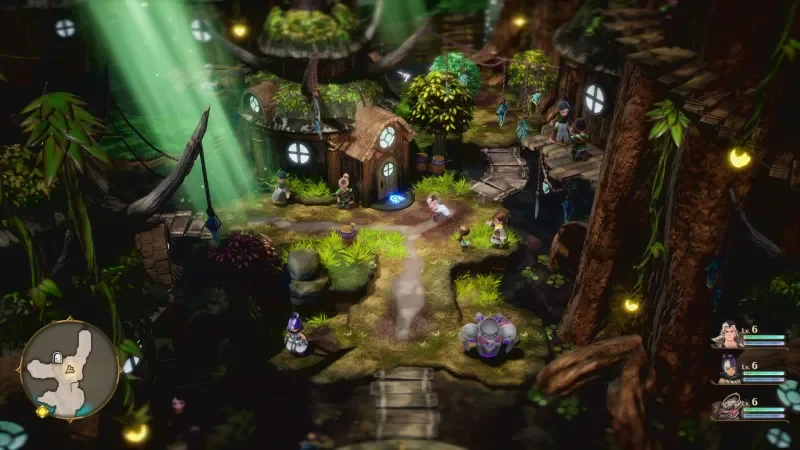
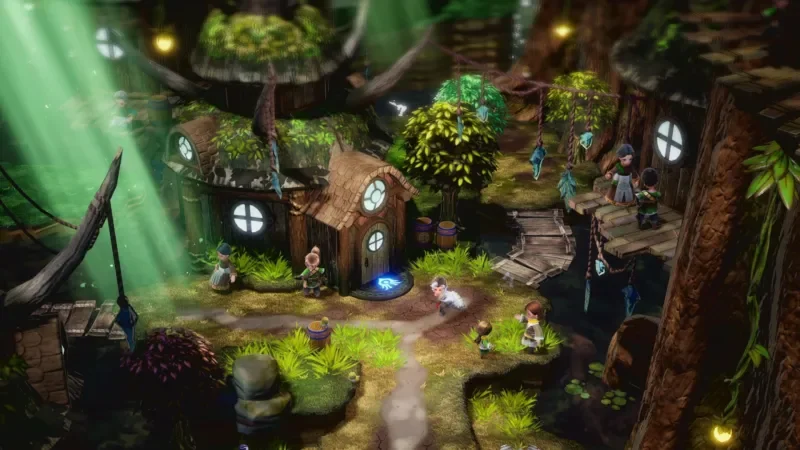
Eternal Anima’s visual design initially calls to mind the HD-2D style seen in some role-playing games, but the preview’s painterly environments and bokeh effects give it a look of its own. The compact settings resemble miniature dioramas arranged across a larger map. Exploring them brings together familiar RPG activities: fishing, gathering items, fighting enemies and speaking with characters tied to the past.
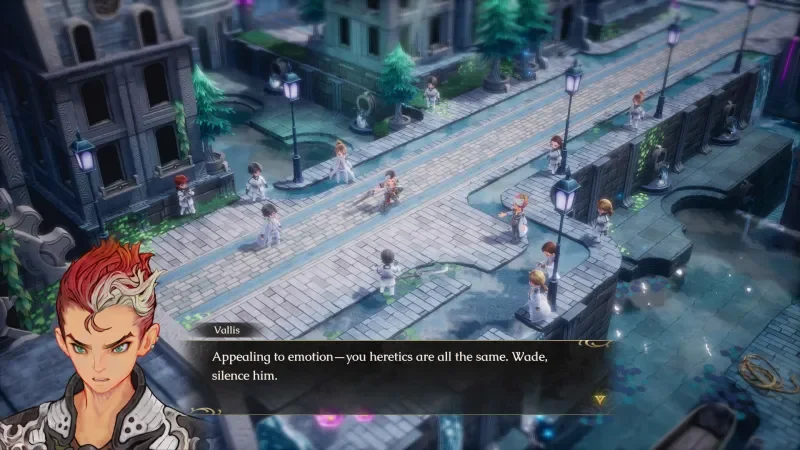
The character models are the main visual mismatch. Their chibi proportions sit awkwardly against the more detailed, atmospheric scenery, and the contrast is especially noticeable alongside the story’s serious themes. The environments and enemies made a strong impression during the preview; the character designs were harder to reconcile with them.
Memories connect the past to Wade’s present
Psychometry gives exploration a narrative role as well as a combat one. In one encounter, Wade examines a glowing sword and sees an animated memory of Fletcher. The sequence tells Fletcher’s story, then awards Wade a bow from that character’s past. These discoveries turn objects into links between earlier lives and the tools available to the player.
Another scene sends Wade roughly two centuries into the past, where he meets a man trying to protect his forest hometown from flooding. Wade knows the flood will eventually reshape the world, and suspects that warning the man could change the present. The preview ends before that idea is resolved, leaving the consequences of altering history open.
There’s a strong connection between that premise and the combat system. In both, Wade gains an advantage by understanding events before they happen: Psychometry reveals what came before, while Future Sight lays out what enemies intend to do next. The preview gives only an early glimpse of how those abilities shape the larger story, but they already make the game’s central interest feel coherent.
Eternal Anima’s hour-long showing left its story questions unanswered, while its battle system was immediately legible and rewarding. The enemy timeline turns information into a tool, and the Break mechanic gives careful play a satisfying payoff. With a March 4, 2027 release date set for PlayStation 5, Xbox Series X/S and PC, the clearest reason to keep watching is whether the full game can build on that tactical promise.