LOTRO’s Minas Morgul Expansion Made a Second Trip to Mordor Count
Minas Morgul paired two memorable zones with a strong story and LOTRO’s first playable Stout-Axe Dwarves, giving the 2019 expansion room to shine.
Minas Morgul showed how Lord of the Rings Online could make a return to Mordor feel worthwhile. Released in November 2019, the expansion brought players back to the dark region after a run of northern adventures, adding two zones and raising the level cap from 120 to 130. Its focused scope drew questions at the time, but its storytelling and new playable race gave the return a distinct identity.
Lord of the Rings Online had a tricky story to tell. The 2017 Mordor expansion had left a poor impression: a drawn-out journey through bleak areas, paired with systems that many players disliked. Yet Standing Stone Games still had more of the Black Book of Mordor story to tell, so another expansion in Sauron’s territory was part of the plan. Minas Morgul had to make that familiar setting compelling again.
A return after a change of scenery
Between the two Mordor expansions, the game moved through a varied stretch of Middle-earth. Update 22 took players to Northern Mirkwood and Dale, revisiting places associated with Bilbo’s journey and introducing Legolas’ family in their underground city. Update 23 expanded the map into Erebor, the Iron Hills and the Grey Mountains. Update 24 then added the Vales of Anduin, a notably beautiful region.
That sequence gave players about a year and a half away from Mordor’s harsher terrain. By the time the story called them back in November 2019, the contrast helped: the return had a clear place in the ongoing narrative, while the earlier journeys had given the world room to breathe.

Two zones with stories to tell
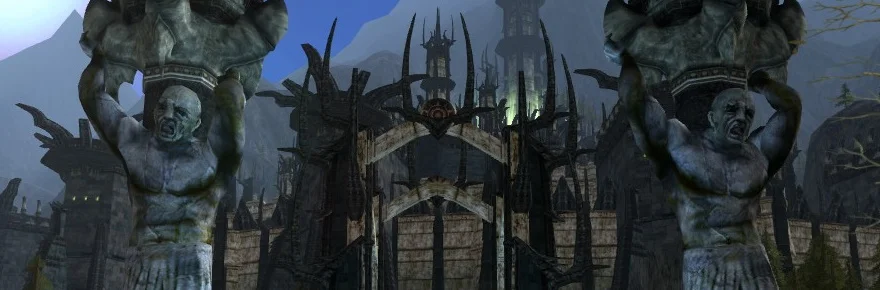
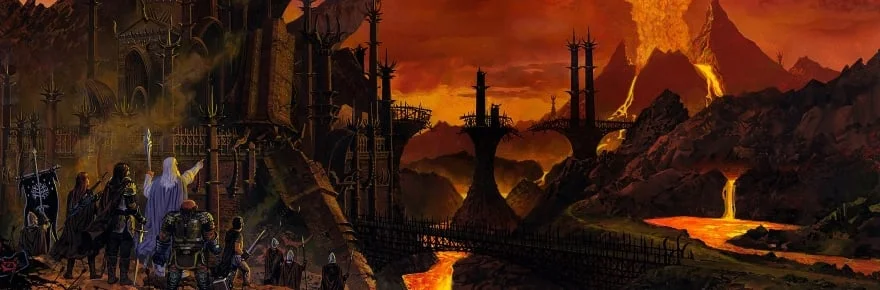
The expansion’s two-zone structure was its most visible constraint. One zone centered on Minas Morgul, the sinister counterpart to Minas Tirith: a haunted stronghold whose light gives it the look of a distorted beacon. The other took players back to the Second Age, placing them alongside the Alliance during its siege of Mordor. Together, the areas offered two different angles on the same shadowed setting.
There was less ground to cover than in some expansions, and that led to concern about the amount of content on offer. The strong writing made the compact design work. Both zones stayed somber, but their histories, characters and settings gave players reasons to explore beyond simply crossing the map. Navigation also proved less frustrating than expected. Here’s the thing: a small footprint feels less limiting when the places inside it are memorable and the story keeps pulling you onward.
The Second Age material also widened the expansion’s reach beyond its immediate return to Mordor. Instead of treating the region only as the backdrop to the current story, it gave players an earlier chapter in its history. That shift brought variety to an otherwise dark pair of zones and gave the overall narrative more room to play with Middle-earth’s past.
A new dwarf lineage
Minas Morgul also introduced LOTRO’s first racial offshoot: the Stout-Axe Dwarves. The premium race came with its own opening adventure, beginning with a breakout from a Mordor prison, as well as racial traits and additional class combinations. The new choices gave character builders fresh ways to shape a hero. Playing a Stout-Axe Captain remains a particular favorite for the columnist behind this retrospective.
That addition helped the expansion feel broader than its zone count suggested. Players could return to Mordor for the story and the scenery, or approach the game through a new character identity and starting experience. The race also tied its introduction directly to the setting, so it felt like part of the expansion’s world rather than a feature set apart from it.
For the writer, that combination of a new race, two absorbing zones and a well-handled story made Minas Morgul punch above its size. The reaction described here is a personal retrospective, rather than a claim about every player’s view. Its central point is that strong questing and a coherent setting can make a compact expansion feel satisfying.
More room to explore
The game’s world kept growing after Minas Morgul. Update 26 added northern regions including the Wells of Langflood. In summer 2020, Update 27 brought Aragorn and Arwen’s wedding, with players present to witness the occasion and help where needed.
Looking back, the run of updates eased one concern raised by the end of the One Ring’s story: whether the game would still have compelling adventures to offer. The writer found that the years around Minas Morgul pointed in the opposite direction, with Standing Stone Games taking the world in several directions and continuing to add regions and tales. The expansion’s lasting appeal lies in that balance: it returned to a familiar dark setting, but made the journey feel fresh through focused storytelling, historical perspective and a new way to play.
More from the series
 LOTRO Legendarium: Looking back at Minas Morgul, the good Mordor expansion
 LOTRO Legendarium: Looking back at the Mordor expansion
 LOTRO Legendarium: Looking back at Gondor’s phantom expansion
 LOTRO Legendarium: Looking back at Helm’s Deep
 LOTRO Legendarium: Looking back at Riders of Rohan
 LOTRO Legendarium: Looking back at Rise of Isengard
 LOTRO Legendarium: Looking back at Siege of Mirkwood
 LOTRO Legendarium: Looking back at Mines of Moria
 LOTRO Legendarium: Looking back at LOTRO’s Shadows of Angmar
 The LOTRO Legendarium column revisits the world of Middle-earth every two weeks. Justin has played LOTRO since its 2007 launch; readers can send topic ideas to justin@massivelyop.com.