Palworld’s Pocketpair Says Creative Freedom Defines Its Indie Identity
Pocketpair says self-ownership and creative control matter more than studio size as it explains why it still identifies as indie.

Success complicates the indie label
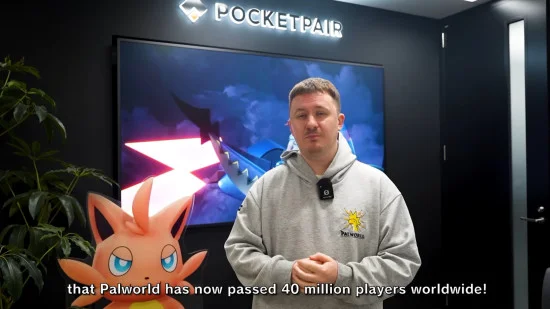
Pocketpair’s success with Palworld has made the studio’s indie identity harder to define by size alone. The game reached 40 million players this year, and Pocketpair has grown alongside it. Yet John “Bucky” Buckley, the studio’s head of publishing and communications, says the key measure is whether a team can decide what games it makes. That’s a sharper test than counting staff or measuring reach, though it doesn’t settle every case.


That view shifts the debate away from headcount and commercial reach. Buckley says Pocketpair is entirely self-funded and has no outside investors or financial backing. He also recognizes why some players see the studio differently after Palworld became a major success. His argument is that scale alone doesn’t settle the question: a hit can change a studio’s public profile without telling us who controls its next creative decision.
The distinction matters because “indie” is often used to describe several things at once: a company’s ownership, the resources behind a game, its route to market, or the creative freedom of its developers. Those factors can overlap, but they don’t have to. A studio may work with a publisher and still guide its own project, while a small team may face constraints that aren’t visible from the outside. The label can describe a working relationship as much as a company’s size.
Independence as creative control
The discussion follows comments from Pocketpair CEO Takuro Mizobe in an interview with VGC. Mizobe described Pocketpair as “a true indie company” and said it intends to keep making games “in that indie way,” while acknowledging that its size and success could put it near double-A territory. Japanese gaming outlet Damonge picked up that question, prompting Buckley to consider where the indie label begins and ends. The exchange shows how quickly a term that sounds simple turns into a question about power: who gets to say what a game becomes?
For Buckley, the dividing line is creative control. A studio can receive money from a publisher or investor without necessarily surrendering its ability to shape a game. Conversely, outside pressure over creative decisions can make a team’s independence less clear. “If a studio has genuine creative freedom, then I think it’s fair to consider them independent,” he wrote. That definition puts the important question inside the business relationship, where players may have less information than they do about a game’s budget or audience.
That’s a useful standard, but it’s also difficult to verify from the outside. Publishing agreements and investment arrangements can differ, and the mere presence of financial support doesn’t tell players how much say a developer retains. Similar arrangements typically involve different balances of funding, risk, and decision-making, so a single label can hide more than it explains. Buckley’s test gives the debate a focus; it can’t make every studio’s circumstances visible.
That definition makes room for studios with external support, while also explaining Pocketpair’s own position. Buckley says the company is fully self-owned, answers to no outside investors, and has freedom to make the games it wants. He argues that having a publisher or investor doesn’t automatically disqualify a studio from being indie; the deciding factor is whether that relationship limits its creative choices. For readers, that shifts attention from the source of a game’s money to the terms attached to it.
A label with several competing meanings
It’s a more useful way to frame the label than a fixed staff limit, though it won’t end the argument. Some people associate indie games with small teams working with little money to reach an audience. Others focus on ownership, publishing arrangements, or the freedom to set a project’s direction. Those measures can point to different answers, especially when a studio grows quickly after a hit. The numbers here are underwhelming as a definition: a player count can show reach, but it can’t show who sets the creative agenda.
There’s also a practical reason the argument persists. Players use “indie” to set expectations about the scale, style, or risks of a game, while developers may use it to describe how their company operates. Those meanings aren’t interchangeable. If you’re working in this space, the distinction affects how you talk about funding and creative authority without treating every studio as if it followed the same path.
Pocketpair’s own work now stretches beyond developing Palworld. The studio has established a publishing arm to help other games, including Windrose, Truckful, and Clicky Islands. That role adds another layer to its identity: Pocketpair is not only making a successful game, but also helping other teams bring theirs to players. (And this is the part most people overlook.) Publishing gives Pocketpair a position in other developers’ projects, but the information here doesn’t establish how much creative control those teams retain.
What Pocketpair’s next choices will show
Buckley accepts that Pocketpair’s size and the money generated by Palworld may lead people to choose another label, such as double-A or triple-i. For him, those terms matter less than the studio’s ability to keep making the games it wants. That leaves a practical test for Pocketpair as it grows: whether its creative decisions remain in its own hands. A claim of independence carries more weight when it can be seen in the choices a company makes over time.
The studio’s position also shows why “indie” can describe more than a budget or team size. A small developer can have a powerful publisher behind it and retain creative control; a self-funded studio can still face constraints of its own. Pocketpair’s explanation puts autonomy at the center of the debate, while its expanding publishing work will give that definition more room to be tested. The label may remain contested. The decisions behind it are what readers should watch.