Tim Sweeney Challenges Steamworks, but Valve’s Cross-Platform Networking Tells a Fuller Story
Sweeney says Steamworks keeps PC games in a closed social system. Valve’s networking can reach beyond Steam, though pricing and platform features remain open questions.

Steamworks sits at the center of a familiar PC gaming argument: how much should a storefront charge when it also supplies services that studios use to run their games? Epic Games CEO Tim Sweeney says Valve’s networking tools have held gaming back by tying developers to Steam’s social system. Valve’s own service details complicate that charge, while leaving a separate question about whether developers should pay for the tools they actually use.

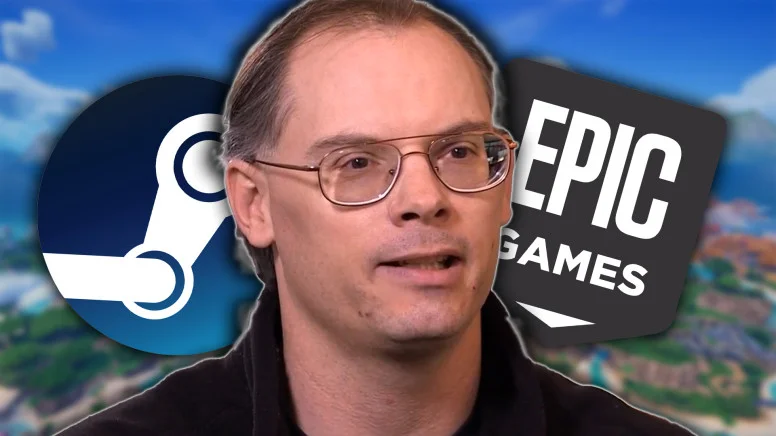
The exchange began with Kiaran Ritchie, Epic’s former Principal Animation Programmer, who questioned why building a competing Steam client would be especially difficult. Ritchie also challenged Valve’s approach to Steamworks: developers cannot simply select individual services and pay for those alone instead of accepting Valve’s 30% revenue cut.
Sweeney added his support in a social media post, saying Valve had “held gaming back for years by locking developers' PC games into Steamworks' social walled garden.” He argued that this limits communication between players on PC and people using iOS, Android, Xbox, PlayStation, Nintendo Switch, and other PC storefronts. That criticism points to a real concern for studios: players increasingly expect multiplayer communities to cross the boundaries between devices and stores.
But the networking claim needs a closer look. A community note attached to the discussion points out that developers can use Steam Datagram Relay, or SDR, across platforms if their game also launches on Steam. Valve describes SDR as a service that sends multiplayer traffic through its network. The setup can help protect players and game servers from denial-of-service attacks while supporting online play. Its use beyond Steam means the service is not limited to connecting players who all bought a game through Valve’s store.

That distinction matters, but it does not settle the broader complaint. SDR has requirements for games that want players outside Steam to use the service, and its networking role does not automatically give players shared friends lists or cross-platform chat. Routing multiplayer traffic and building a social layer are different jobs. A studio may be able to use Valve’s network to connect a match across devices while still needing to solve communication, matchmaking, and account features separately.
Steamworks also reaches beyond networking. Valve offers developers services for multiplayer, matchmaking, achievements, and leaderboards. Those pieces can shape how a game works after launch: how players find a session, track progress, compare results, or stay connected. A competing store can provide a place to buy a game, but matching Steam’s wider developer toolkit means building or sourcing services that support those experiences too.
That’s the strongest complication in Sweeney’s argument. Steamworks does not appear to make cross-platform play impossible across the board, and its networking service can extend beyond Steam under stated conditions. At the same time, those conditions and the separation between networking and social features give studios reasons to ask how much control they have over the whole player experience. The practical answer will depend on each game’s needs and the services its developers choose to build themselves.
The pricing debate stands on its own. A developer can recognize the value of Valve’s matchmaking or networking tools and still argue that a 30% cut is too high, especially if a game uses only some of the available services. Paying separately could make costs more closely reflect a studio’s needs. Yet providing each service individually would also leave developers to weigh the cost and effort of assembling a comparable set of tools elsewhere.
For players, the difference shows up in the details: whether friends can play together across platforms, whether they can communicate, and how reliably a game supports online sessions. Sweeney’s criticism raises those expectations, while SDR shows that Valve already supports at least part of the cross-platform picture. The next useful test is how individual games use these tools, and whether storefronts give developers enough flexibility to deliver the shared communities players want.