Phantom Blade Zero Review: S-Game’s Action RPG Makes Exploration a Highlight
Phantom Blade Zero pairs expressive kung-fu combat and standout bosses with Metroidvania-style exploration across five richly varied areas.
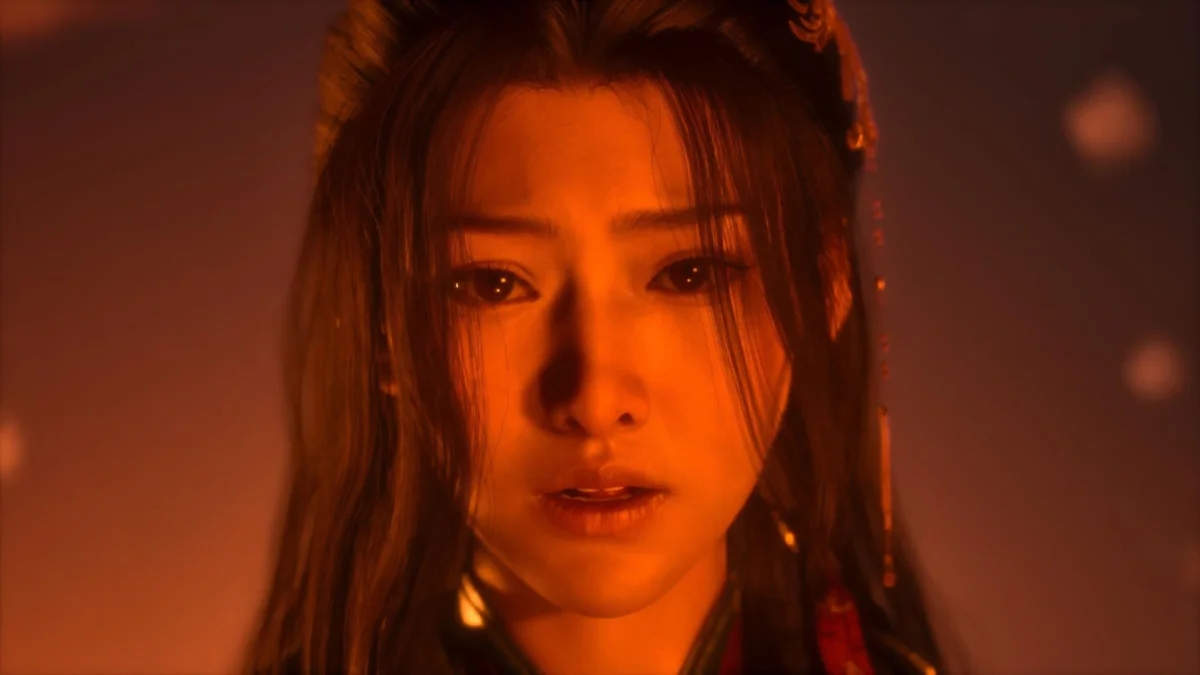
Phantom Blade Zero makes its strongest case through the way its combat and exploration feed into each other. S-Game’s action RPG delivers cinematic fights, a wide-ranging weapon set and a world that rewards careful backtracking. Its five main areas bring a Metroidvania structure to a game whose identity has been debated for years—and that design gives the adventure much of its character.

The result earns a 10/10 from PCGamesN reviewer Tom Hopkins, who describes the game as a special experience. In his view, it can stand alongside the best action RPGs: its combat feels excellent, its environments are memorable, and its story takes an original path. The game also has rough edges, including frame rate problems and stuttering in one area that S-Game said would be fixed by launch.
Combat built around timing and choice
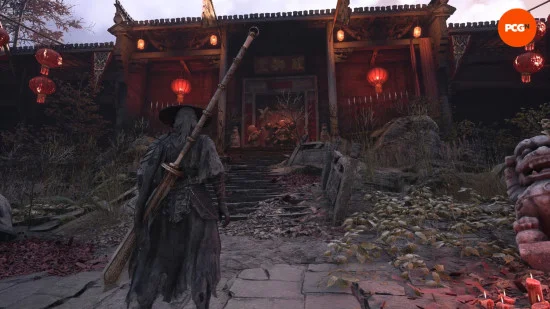
Fights ask players to read attacks and respond with the right defense. Soul, the protagonist, can block normally, parry strikes marked in blue and dodge attacks marked in red. Land the timing and the action slows as he twists through a smoky counterattack. That rhythm makes even the basic encounters satisfying, from the opening stretch in Weeping Creek Valley through to the final fight.
Many battles revolve around breaking an enemy’s guard, then dealing damage before it recovers. The pattern could grow repetitive, but the range of opponents keeps encounters shifting. Players face conventional weapon duels as well as sweeping laser attacks, falling blades and enemies that leap across the arena. The challenge comes from recognizing each threat and finding the moment to strike.

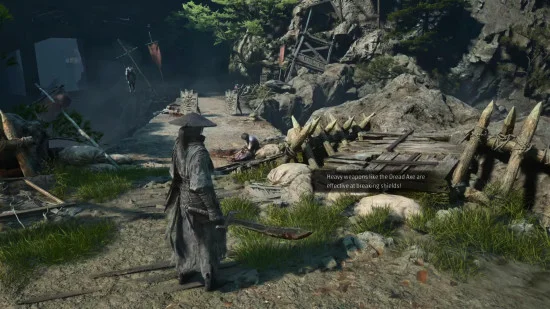
Weapons give that decision making more depth. Soul begins with a straightforward sword, then gains access to options such as a heavy hammer, a fire-spitting mask, bladed chains and a sword that makes him drunk. Some weapons are better suited to quick openings, while others hit hard, break shields, deal elemental damage or attack several directions at once. Accessories add small buffs, weapon upgrades unlock further effects, and Phantom Edges provide special attacks that recharge at checkpoint bells.
That variety matters against bosses, whose speed and attack patterns can make a single weapon choice feel limiting. A nimble foe that vanishes between strikes calls for a quick response; a hulking opponent swinging a golden hammer invites something heavier. The arsenal gives players room to adapt, and the reviewer says the prospect of discovering a new weapon helped make each major fight more exciting.
Battles designed to surprise
Boss encounters are a frequent highlight, both for their spectacle and their changing demands. They range from a puppet wielding unstable swords on a mountaintop to seven figures joined by red string in a courtyard. Several fights have two or three phases, with the enemy’s form and moves changing as the battle progresses. That can turn a moment of relief after emptying a health bar into a fresh test of timing.
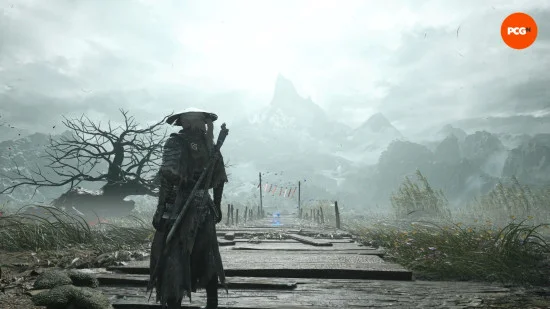
Checkpoint bells ease the sting of those longer fights: after a defeat, players can restart from the phase where they fell instead of repeating the entire encounter. Some bosses also interrupt exploration without warning. A rooftop journey can turn into a sudden duel, while a creature rising from a lakeside bog can start a fight in the middle of a quiet search. Those surprises keep the world feeling unsettled.
The motion-captured animation lends the showdowns much of their force. Bosses move with fluidity and speed, often covering ground Soul can’t match, while each clash builds toward an opening for a finishing blow. Hopkins calls several fights among the best he has played in an action RPG, praising how they combine visual scale with the practical challenge of finding a safe moment to attack.
A world made for backtracking
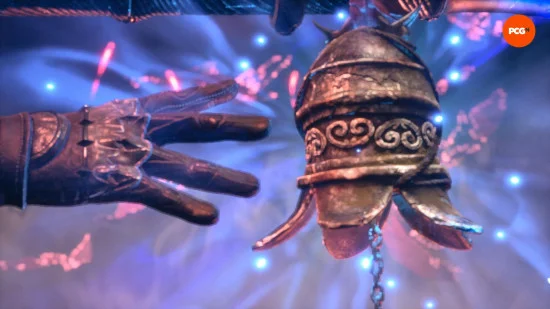
The game’s five main open areas, alongside smaller locations, make exploration a central part of the experience. Their settings include a lush valley, a crimson forest, snowy mountains and a decaying city. Although architectural styles carry across the map, each place has a distinct atmosphere. Hopkins found the environments striking enough to take screenshots while simply travelling through them.
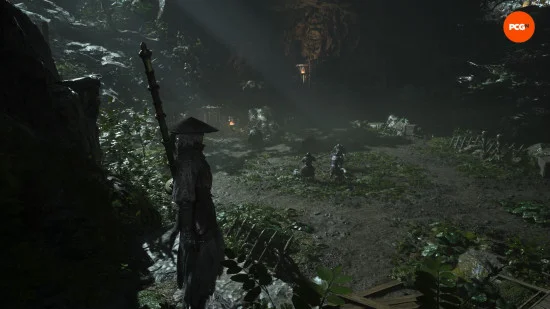
Each main area takes about five hours to fully explore and follows a semi-linear structure. The main route is clear, but branching paths, side quests and collectibles offer reasons to look around. New regions open as the story advances, with smaller sections often gated until players push farther along the central path.
That structure becomes more rewarding as Soul collects tools that also work as weapons. A flame mask clears brambles, a Phantom Edge cuts through dense fog, and a chain blade taken from an early major foe lets Soul grapple to certain points. Other routes remain blocked until the relevant boss is defeated, potentially returning players to earlier discoveries many hours later. Different Phantom Edges also change how players move through particular areas, and one later region introduces new traversal mechanics to suit its wider layout.
It’s familiar Metroidvania design, but the reviewer finds it a strong fit for the dense environments. Hidden bosses and challenges give each map its own discoveries, while documents and upgrade materials reward a thorough search. The result is an adventure where progress through the story and curiosity about a blocked path can pull in different directions—in a way that makes revisiting locations feel worthwhile.
Style and story with their own identity
S-Game’s “kung-fu punk” vision comes through in both the combat and the presentation. Cinematic scenes sit alongside hand-drawn animated flashbacks, and even the maps use a rice-paper style that suits the setting. Those details give the game a distinctive visual texture beyond its large arenas and elaborate fights.
The story follows Soul and uses unfamiliar terms, including “transcension” and “maskwalkers,” while asking players to piece together who its characters are and what they have done. That can make the plot hard to follow at points, but Hopkins says it reaches an emotional payoff. He recommends pursuing the perfect ending, which he found worth the extra time and effort.
Phantom Blade Zero draws on ideas familiar from action RPGs while building its own mix of combat, exploration and style. The review’s clearest takeaway is that S-Game’s first AAA title has room to become the start of a larger series—and that its world leaves a strong reason to want another journey through Wulin.