EA Reportedly Chose Star Wars Battlefront III Over BioWare’s Mass Effect Sequel
A Bloomberg report says EA prioritized a possible Battlefront III over a Mass Effect game already in development, as BioWare faced a shutdown.
Electronic Arts reportedly weighed two major science fiction projects and chose to keep a possible Star Wars Battlefront III alive at the expense of BioWare’s next Mass Effect. That account, from Bloomberg, offers a stark explanation for why EA would end work on a long-running role-playing series while favoring a project that had yet to begin production. The report describes a choice between two costly bets on science fiction, with the publisher’s resources directed toward the Star Wars option.
BioWare’s fifth Mass Effect was already well into development when the studio closed last week, according to the source article. Battlefront III, by comparison, had not entered development. EA’s decision therefore appears to have turned on where it wanted to place future investment, rather than which project was closest to release. The report says the publisher considered its portfolio in the years ahead and opted to continue with the potential Battlefront sequel.
That choice leaves important details unresolved. The report describes an opportunity to develop the game with Disney, but provides no release window, platforms, price, gameplay plans or confirmation that production has started. For players, the distinction matters: a reported decision to prioritize a project is not the same as a finished game with a schedule. Any eventual sequel would still need to move from the possibility described in the report into active development.
BioWare’s wider business troubles

Bloomberg also points to a run of projects that may have weakened BioWare’s position. Mass Effect: Andromeda received a poor response in 2017, and Anthem failed in 2019. Dragon Age: The Veilguard, released in 2024, was better received by critics, but reportedly fell 50% short of EA’s sales expectations. Together, those outcomes suggest that the studio’s history and reputation alone weren’t enough to secure continued backing.
That contrast is especially sharp for The Veilguard: positive critical reception did not translate into the sales performance EA wanted, according to the reporting cited here. The source doesn’t provide sales totals or detail how EA set its target, so the 50% figure needs to be understood as a reported gap against expectations, not a measure of copies sold. Still, it points to the pressure publishers face when a large project earns favorable reviews but fails to meet internal commercial goals.
BioWare had already been reduced through years of layoffs. By the time it closed, the source article says just 50 employees remained, all working on the next Mass Effect. That headcount makes the end of the game’s development particularly concrete: the remaining team had been focused on the sequel, and the studio’s closure brought that work to a halt.
The source also raises questions about how EA’s ownership could affect a studio known for games with positive LGBTQIA+ representation. EA went private last year in a $55 billion acquisition involving several investment groups, including Saudi Arabia’s Public Investment Fund and Affinity Partners. The article points to the tension between BioWare’s creative history and the backgrounds of some investors. It does not cite evidence that the studio closed because of its themes, and the available reporting doesn’t establish that representation played a role in the decision. A separate report, cited by the source, said BioWare removed diversity elements from demos to limit negative feedback from EA; that claim adds to the questions around the studio’s creative environment, without proving a cause for its closure.
What remains of Mass Effect
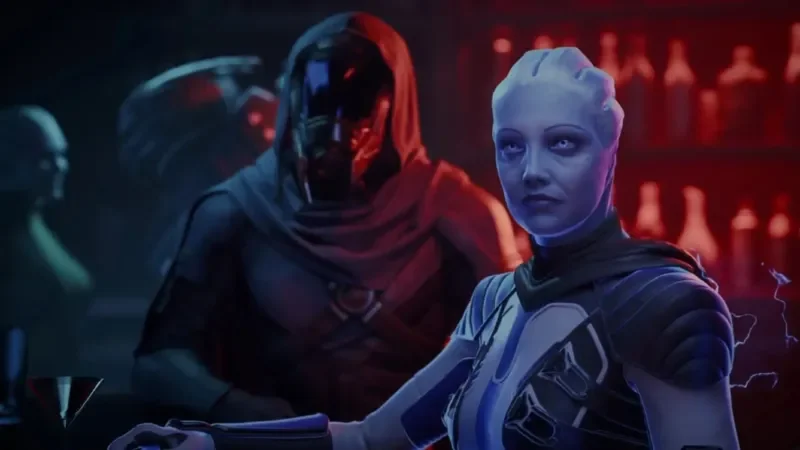
Reports of a trailer featuring Liara and early musical drafts by composer Austin Wintory have offered glimpses of what the canceled game might have become. A trailer that appears to have leaked reportedly suggested the title Mass Effect Universe, but that name was not confirmed. Those fragments can give fans a sense of the project’s direction, yet they don’t fill in the major gaps: the source provides no complete account of its story, systems or planned platforms.
The screen version of Mass Effect remains in development at Amazon, according to a report linked in the source. That keeps the series active in another medium, though it doesn’t replace a new game or revive BioWare’s canceled work. For players, the key takeaway is that EA’s reported preference points toward a possible Battlefront sequel, while the future of Mass Effect on consoles and PC remains uncertain.
Source: Bloomberg
===DONE===