Tenebris Somnia Review: FMV Horror and Classic Adventure Design Make a Strong Pair
Tenebris Somnia mixes clever apartment puzzles, tense survival horror and vivid live-action scenes into an eight-hour nightmare.
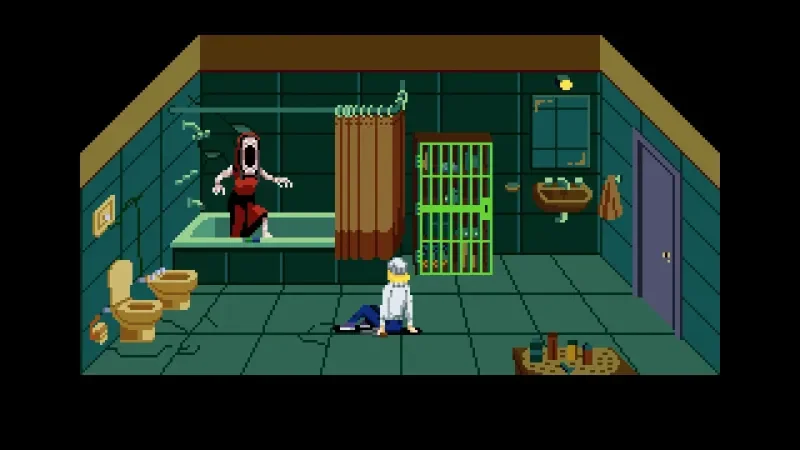
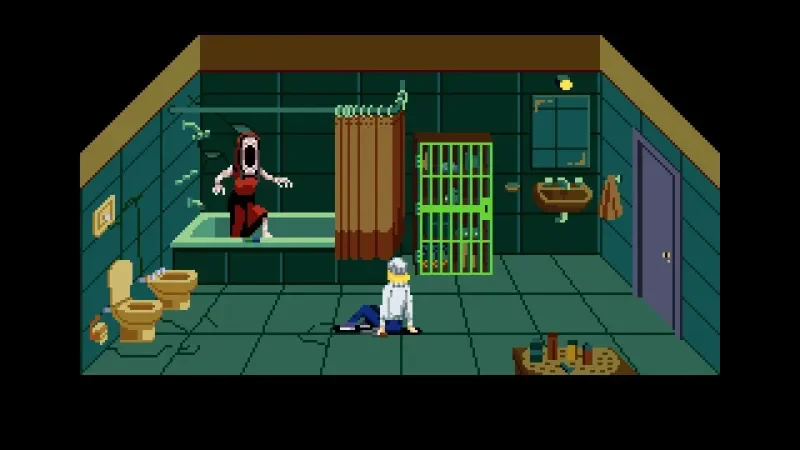
Reviewed on: PC
Platforms: PlayStation 5, Xbox Series X/S, Switch, PC
Publisher: New Blood Interactive
Developers: Andrés Borghi, Saibot Studios
Release:
Tenebris Somnia’s most effective trick is making its two styles of horror strengthen each other. Its pixel-art adventure has the puzzles and survival pressure of an old-school genre game, while live-action scenes give its monsters and characters a startling physical presence. The result is an eight-hour descent into a dream world that feels nostalgic in its design without being trapped by it.
A nightmare rooted in a relationship
Julia visits the apartment of Ivan, her filmmaker ex-boyfriend, after recurring dreams in which monsters kill him. The initial concern turns into a much darker investigation as the nightmare begins to overlap with reality. Tenebris Somnia tells the story without dialogue, letting images, actions and the contrast between its live-action footage and pixel-art world carry the emotional weight.
That contrast has a strong reason to exist within the fiction. Ivan and Julia share a history involving a horror film he made, and the game’s own live-action sequences echo that movie-within-a-movie idea. The footage feels connected to the story rather than attached as a novelty. It also gives the game room to explore obsession in both creative work and romance, with revelations that can be surprising and upsetting.
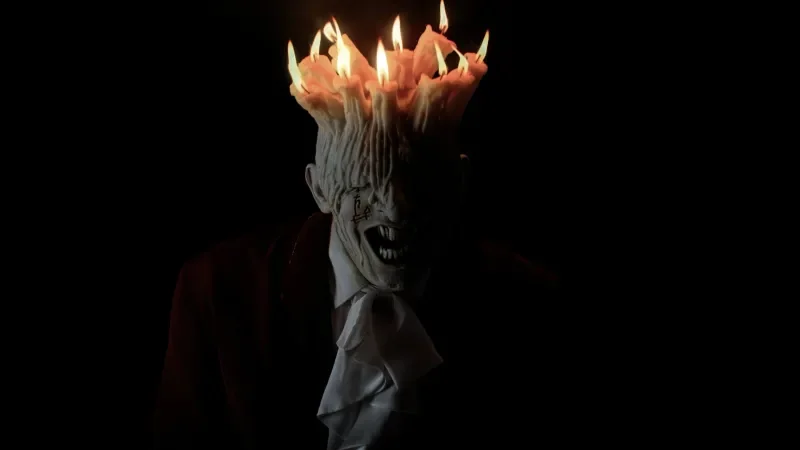
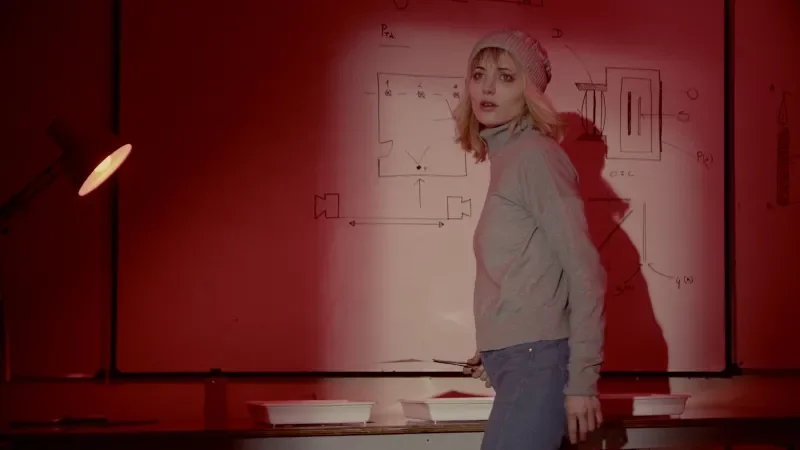
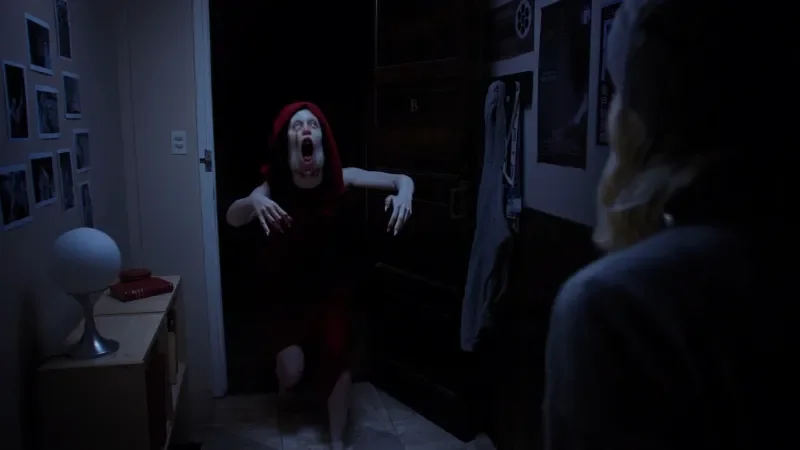
The live-action performances help Julia register as a person rather than a small sprite moving through an ominous building. Fear, concern and determination show clearly in her expressions, giving the player an emotional anchor as the story grows stranger. The scenes are well shot, and their practical effects make the creatures feel more disturbing than their pixel-art counterparts. Some even provide visual clues, so paying attention during a film sequence can matter once control returns to the player.
These interruptions are generally well timed. A door opening into a sudden live-action scare is a small, effective use of the format; other scenes give key moments space to land without keeping the game away from its puzzles for too long. The story does sometimes explain its supernatural lore more directly than its silent presentation might suggest. Still, its unusual turns remain understandable across the roughly eight-hour adventure, even when the answers are deliberately unsettling.
Four floors of puzzles and pressure
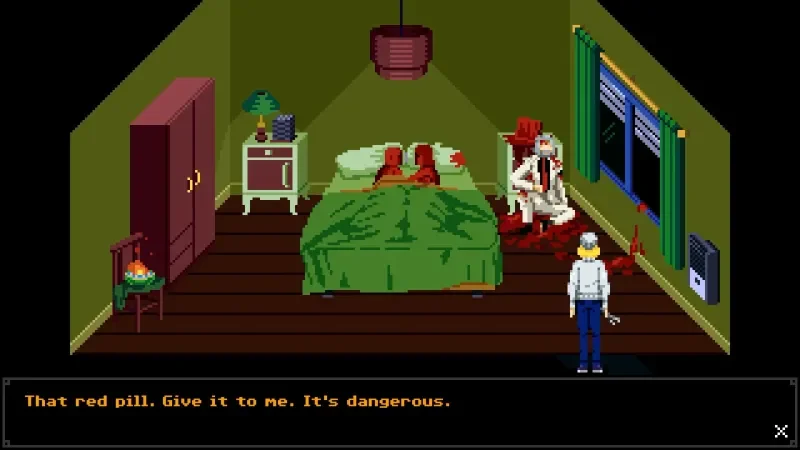
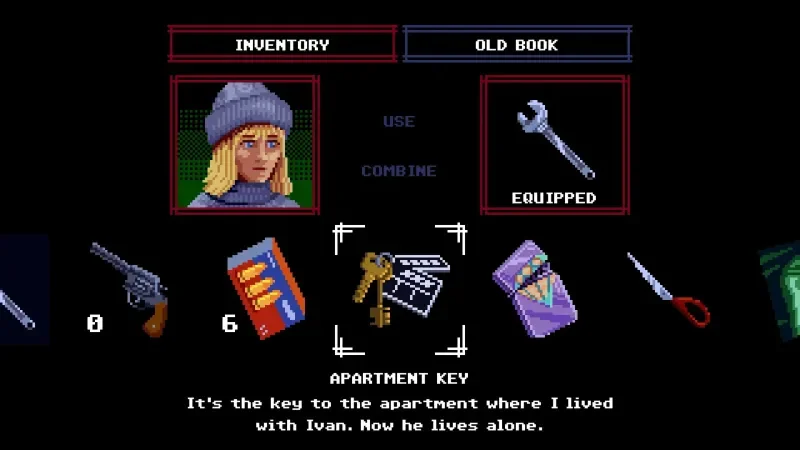
The whole adventure takes place inside a dreamlike version of a four-story apartment building. Julia searches its rooms and floors for objects, combines what she finds and uses clues to work out where to go next. The familiar point-and-click structure could have made the game feel static, but its puzzles make smart use of the limited visual detail. Reflections in mirrors and screens, for example, lead to inventive situations that are best discovered firsthand.
The puzzles vary enough to keep exploration lively. They ask for observation and lateral thinking, but their solutions don’t depend on opaque leaps. Connecting the clues feels satisfying because the game gives the player enough information to reason things out. One particularly devious puzzle makes limited save points part of the challenge, turning a basic survival-horror resource into a tool that changes how the next stretch of the adventure is approached.
That design captures what works about the game’s older influences: simple presentation leaves room for a clever idea to carry a sequence. The apartment’s small scale also helps. Each floor becomes a contained space to learn, revisit and understand, while the recurring details of Ivan’s memories tie the puzzles to the story. The setting is restrictive by design, but that restriction gives the game a clear shape.
Combat that keeps its edge
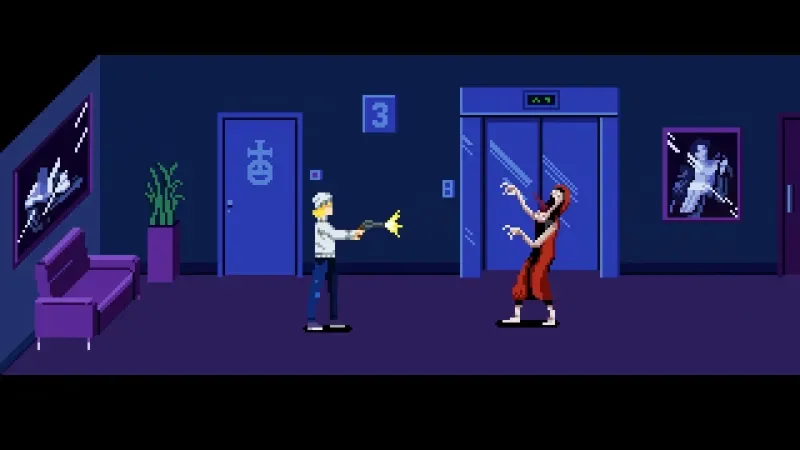
When the monsters arrive, Tenebris Somnia shifts from careful exploration to deliberate survival horror. Melee swings and gunfire use measured animations that recall older adventure games, yet they remain responsive enough to avoid feeling awkward. A pipe or shotgun can handle groups of grotesque enemies, though evasion is often a sensible option: many ordinary threats don’t have to be fought if Julia can get past them.
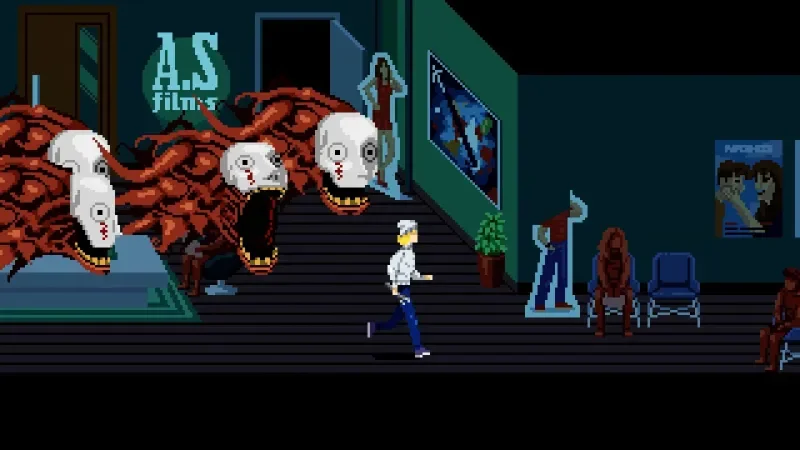
Boss fights bring their own ideas rather than repeating the same encounter at a larger scale. One pits the player against waves of small, gremlin-like enemies. Another asks Julia to defend a fragile effigy of herself from a procession of demented house servants. A later fight uses mirror images of a tentacled flesh monster, turning the game’s reflection motif into a direct threat. The variety suits an adventure where puzzles take up much of the running time, and the encounters tend to end before their pressure becomes exhausting.
Ammunition and health are limited, but resource management rarely becomes punishing. Playing carefully pays off, particularly when a monster can be avoided instead of engaged. When supplies do run dangerously low, the game gives the player a brief taste of panic before a box of bullets or a health vial appears at a useful moment. That balance preserves tension while keeping a single bad encounter from overwhelming the whole trip.
A throwback with a clear identity
Tenebris Somnia draws from point-and-click adventures, classic survival horror and full-motion video, but the mix gives each influence a job. The pixel art supports exploration and puzzles; combat supplies bursts of danger; live-action footage makes the story’s most frightening images tangible. Its low-resolution presentation is part of the appeal, while the filmmaking helps the experience stand apart from a straightforward retro-style horror game.
Its strongest moments come when those pieces meet: a clue in a filmed scene changes how a room reads, or a familiar puzzle idea becomes part of the supernatural threat. The game’s confined setting and occasional direct lore explanation keep it from being perfectly mysterious, but neither weakens the steady flow of discoveries. Tenebris Somnia is a compact, confident horror adventure with puzzles worth solving and film sequences that earn their place. Players who enjoy measured exploration and carefully rationed combat will find a nightmare that knows when to make them look closer—and when to make them run.