Penguin Colony Turns Arctic Sliding Into a Lovecraftian Political Story
Tali Faulkner’s new game pairs playful penguin movement with escalating horror and an unapologetic story about power and indifference.
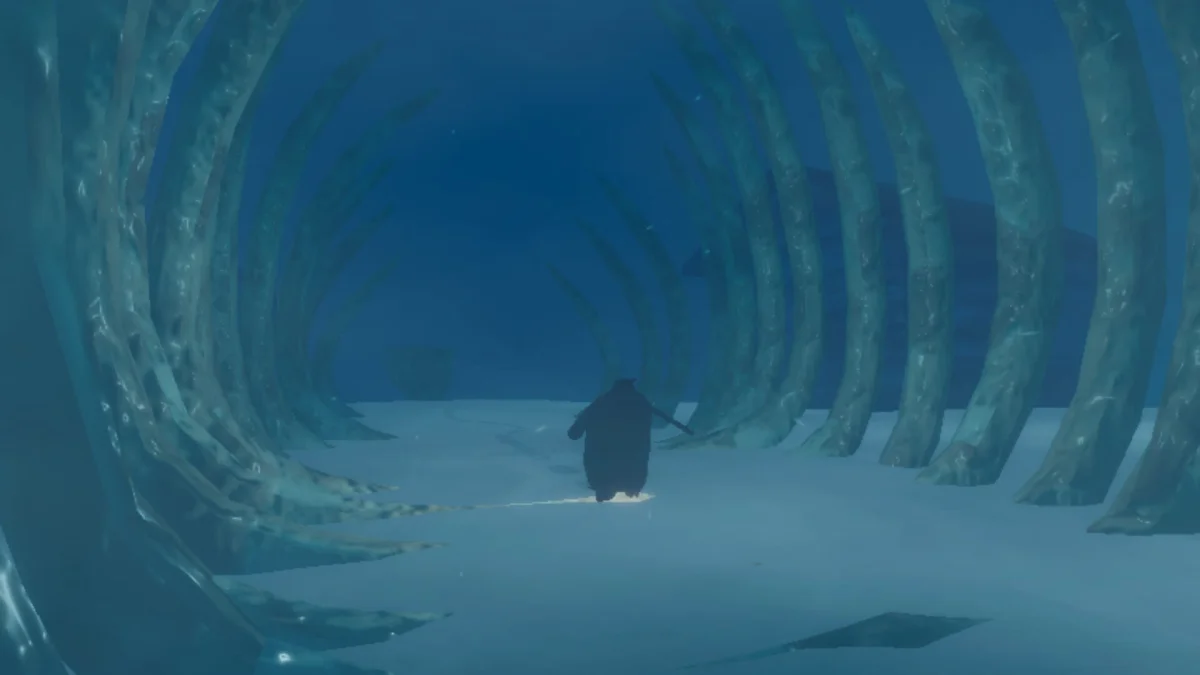
Penguin Colony makes a deceptively simple offer: take control of a penguin and slide across the ice. Then it brings in human intruders, buried horrors and an increasingly direct argument about power and indifference. For Tali Faulkner, the designer behind Umurangi Generation, the playful movement is the entry point to a story that doesn’t intend to stay subtle.
Released in 2020, Umurangi Generation cast players as photographers documenting a sci-fi apocalypse. Its camera gave the game a way to connect exploration with the anxieties of a generation inheriting a damaged world. Faulkner’s new project trades photography for ice ramps, but keeps the underlying move: make the central activity enjoyable, then let the world around it sharpen the meaning.
“I don't think now's the time for subtlety or nuance,” Faulkner said. That stance helps explain why Penguin Colony starts with a premise that feels absurd and grows more unsettling by degrees.
A penguin’s view of Lovecraft
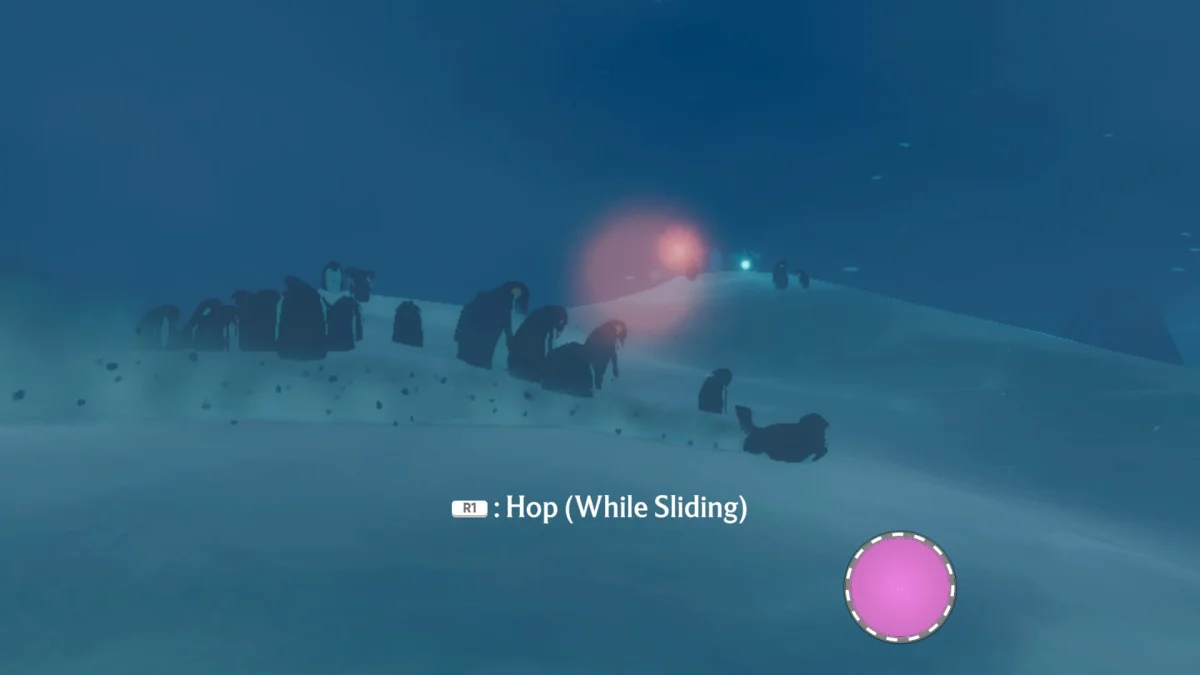
At first, you’re a small penguin in a home that has been invaded by Nazis. They’re digging beneath the ice for something, while the player waddles around human structures, including cabins and radio towers. The game lets you switch between the penguins you encounter, and the basic pleasure is physical: slide, pick up collectibles and explore the Arctic.
That surface-level fun matters. Collectibles prompt ominous narration, but the player can spend time surfing around without pushing the story ahead. At a recent festival, Faulkner and the team expected the game’s Lovecraftian premise to draw mostly teenagers and young adults. Instead, children lined up to play. The team limited each turn to three or four minutes because the queue was so long.
One young player, the writer’s six-year-old, delighted in sending an Emperor penguin off a cliff and into the water. She didn’t connect the antics to the game’s resistance themes. That gap between what a child can enjoy and what an older player may read into the story is part of the game’s layered design.
Faulkner said the idea began with a question about H.P. Lovecraft: “What would his protagonists have been during World War II if he was alive? Oh, okay, that answers itself.” As the penguin explores, the signs of human violence accumulate: bodies, blood, strange markings and people speaking in unfamiliar tongues. The trail eventually leads beneath the ice, where the story confronts slavery, power and the unknown.
There are no jump scares, but there are dead bodies and eldritch horrors. The game can be approached as a playful penguin adventure or as a Lovecraft-inspired descent into darker material. Faulkner sees room for both readings. Like Umurangi Generation, which could be described as Jet Set Radio with a camera, Penguin Colony may leave players with ideas that take time to settle.
Direct politics, difficult choices
The game’s later story makes its political meaning clearer, with analogies to Gaza and the world’s indifference to genocide. Origame Digital didn’t hide those aims while pitching the project. That candor made the search for a publisher harder, according to Faulkner.
After Umurangi Generation became an award-winning hit, Faulkner said publishers were eager to hear from the studio. But when Origame described what Penguin Colony was about, some said they weren’t looking for that kind of game or had filled the relevant slots. The team ultimately found a publisher in Fellow Traveler, whose catalogue includes politically engaged narrative games such as Citizen Sleeper and 1000xResist.
Choosing to be direct carried weight for a studio with staff depending on the project. Faulkner recalled worrying midway through development that he was risking the whole studio and might be blacklisted. Still, he argues that developers shouldn’t soften their politics just to keep players who disagree with them on board.
That conviction shapes the game’s approach to Lovecraft, too. His work has inspired countless games, but Faulkner said many direct adaptations feel stale unless they find a new angle. Penguin Colony turns the familiar horror tradition inside out by placing a penguin in the middle of it, and by asking what fear of the unknown reveals about the person doing the fearing.
The game is also part of a proposed trilogy that would remix and reinterpret Lovecraft’s work over time. Its core contrast is already clear: joyful movement on the ice, dread under it, and a story that becomes harder to dismiss as mere atmosphere the farther the penguin goes. The sliding can keep players moving; what they find below is meant to stay with them.