October 2026 Steam Hardware Survey Shows Linux Rebound and Shifting PC Specs
Linux gained 0.9% as SteamOS led distro growth, while 16GB RAM retook the top spot. October’s shifting user mix makes next month’s results key.

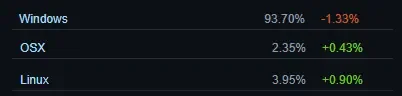
Linux’s 0.9% gain on Steam in October looks like a strong monthly move, but the survey’s user mix shifted sharply at the same time. That makes the result harder to read as a simple measure of operating system adoption: the change may reflect who was counted as much as what people are choosing to run. SteamOS was the clearest Linux gainer, while Windows fell and 16GB of RAM regained its place as the most common configuration. A notable snapshot, with an asterisk.

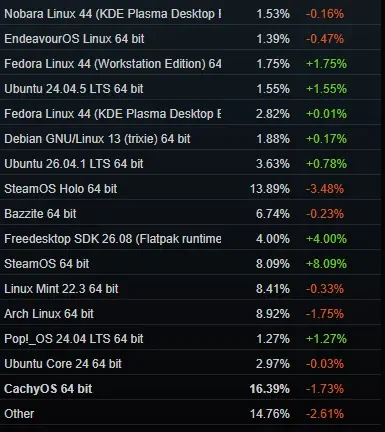
The October 2026 Steam Hardware Survey shows Windows down 1.3% overall. Windows 10 lost 2.5%, while Windows 11 increased, leaving the two versions moving in different directions within a declining Windows share. Mac gained, with the newly released MacOS 27 cited as a factor. Across Linux distributions, most popular options rose, and SteamOS led the gains. Those movements give readers several possible stories, but the survey doesn’t by itself explain what caused each one.
The user mix complicates the Linux rise
The reported shift is striking, but the article’s key context is the survey’s changing language breakdown. English speakers accounted for 4.8% more of the sample than in September. The previous month’s sample, by comparison, had a 9.4% drop in Chinese speakers. Since Windows is described as much more widely used than Linux in China, that change could help explain why Linux’s share rose between the two months. It’s a plausible connection, not proof that the language shift caused the operating system result.

That distinction matters because a hardware survey describes the people represented in its sample, and changes in that sample can move the reported shares. A larger proportion of English speakers could alter the balance even if individual users’ operating system choices hadn’t changed at the same rate. The figures don’t establish how much of Linux’s gain came from the mix, or how much came from actual adoption. For that, readers would need the pattern across more than one month and a clearer comparison of the samples.
October’s figures are worth watching, but they aren’t enough to establish a lasting trend on their own. The source points to similar sharp monthly swings in the past, which often reverse in the following survey. If you’re tracking Linux gaming, the useful signal will be whether Linux and SteamOS retain their gains once the reported language mix changes again. A repeat under a more comparable mix would carry more weight than a single spike.
Memory and graphics configurations shift
The survey also puts 16GB of RAM back in the top spot, replacing 32GB. That reversal gives the next monthly report a clear hardware detail to follow, but it doesn’t explain why the ranking changed. The source raises inflated RAM prices as a possible factor in whether 16GB stays on top. October’s figures alone don’t show whether users changed their systems, whether the sample shifted, or whether the ranking will hold. That uncertainty is part of the story.
A top-ranked configuration tells us what’s most common among the users represented; it doesn’t tell us what every player owns or what a new game needs to run well. Memory capacity is only one part of a PC, and the survey’s ranking shouldn’t be treated as a performance benchmark. The practical read is narrower: 16GB has returned to the lead in this month’s reported mix, while 32GB has slipped behind it.

Graphics memory moved in a different direction: configurations above 8GB of VRAM declined fairly consistently, while systems with 4–8GB increased. That change describes the reported mix of Steam users’ hardware, rather than performance in any particular game. It also doesn’t establish whether people bought different graphics cards or whether the sample changed. For players comparing the figures with their own PCs, it’s a reminder that the most common configuration in the survey doesn’t necessarily set the requirements for new releases.
What the next report can clarify
October’s strongest headline is the Linux rise, but the combination of a 0.9% share gain and a notable change in the sample’s language mix calls for caution. SteamOS’s lead among Linux distributions is a more specific development, though one month still can’t show whether it will persist. The next survey should help clarify whether Linux keeps its ground, whether Windows recovers, and whether 16GB remains the most common RAM configuration. The useful comparison will be the direction of those figures alongside the sample composition.

Here’s the thing: a monthly survey is best read as a snapshot first and a trend line only after repeated results. That’s especially true when the report itself points to a substantial change in who was counted. Another Linux gain would strengthen the case that October marked a continuing shift, while a reversal would underline how much one month can move. Neither outcome, by itself, would explain the cause.
This is more significant than it looks for anyone following Linux gaming, but the significance rests on consistency. SteamOS leading the Linux gains gives the movement a concrete detail to track; it doesn’t yet show how durable that lead is or what drove it. And this is the part most people overlook: operating system share, hardware mix, and the survey’s changing sample all appear in the same report, but they answer different questions. Keeping those measures distinct makes the next comparison more useful.
The month’s numbers offer a snapshot of the PCs and operating systems represented on Steam. Their value lies in the pattern across reports: a repeat Linux gain under a more comparable user mix would make October look less like a temporary swing, while another reversal would reinforce how much a single month can move. For now, the cleanest conclusion is that Linux rose, SteamOS led within Linux, and the survey’s shifting mix limits what October alone can tell us.
Source: SteamDeckHQ’s October 2026 survey coverage, written by Oliver Stogden.