Why MMORPG Roleplay Depends on More Than Names and Lore
MMORPGs let players shape their own fun, but shared worlds make immersion a social choice as well as a personal one.
In an MMORPG, one player’s joke character can become part of everyone else’s evening. That’s the tension behind naming rules and roleplay: players share a world, yet the game rarely gives them a common idea of how seriously to treat it.
A World of Warcraft forum argument from just before The Burning Crusade launch offers a small but telling example. A player said he had been forced to rename his Dwarf Priest, Sunandmoon. The name wasn’t offensive, so he couldn’t see why it had drawn attention. On a roleplaying server, though, names are part of how players signal that they’re treating the setting as a shared place. The complaint raised a question that still matters: does that signal matter if the game lets players ignore it?
There’s no simple answer. Roleplay is more common in online worlds than it may appear, as a previous column argued. But a developer can’t make everyone care about the fiction. Naming rules can set some boundaries, yet even a name that fits a game’s conventions might read as a joke to another player.
In Final Fantasy XIV, for instance, the naming conventions for Roegadyn can make names like Mountain Dew, Food Lion or Annoying Orange feel compatible with the setting. A player can also give a Lalafell a deliberately silly name and wear a mascot costume through every cutscene. The game permits that kind of play, and players generally face no penalty for it.
A shared world changes the stakes
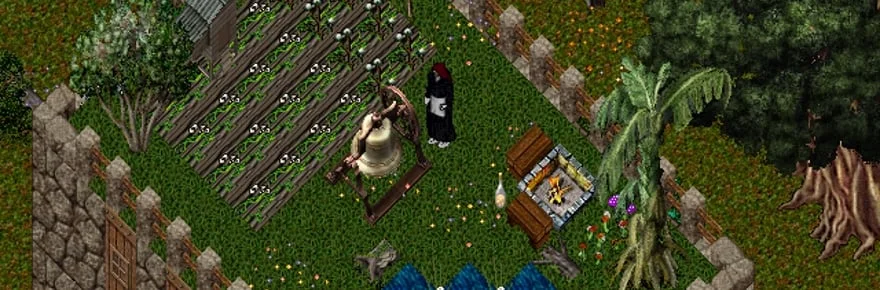
In a single-player game, an individual player’s approach usually stays private. If someone alters their copy of Metroid: Ravenous to give Samus a different look, that choice doesn’t change anyone else’s playthrough. In a shared world such as Ultima Online, a name like “Samus Aran Big Naturals” appears in other players’ space. It can break the mood they’re trying to create.
There are degrees to this, of course. Two players might choose names that vary in how closely they fit FFXIV’s setting, while both still engage with the story in good faith. That’s different from a name designed to turn a character into a running gag. The distinction isn’t a perfect measure of anyone’s intentions, but it helps explain why some players see a difference between an imperfect fit and a deliberate disruption.
Designers also shape what feels out of place. RuneScape has lore, yet it also includes a “Buff Sharkman Costume” as a regular reward. Trove has a story world while openly playing with the idea of lore itself. When a game invites absurd costumes and broad humor, players have reason to wonder where its own boundaries lie.
That complicates the reaction to a character who wears a 2B outfit and a squirrel head during an important trial. Another player may find the look makes the encounter impossible to take seriously. But the outfit and the activity exist because the designers put those tools in the game. Players are using what they were given, and the game itself has helped set the tone.
Room for play, room for consideration
That doesn’t mean players who value immersion are being unreasonable. They aren’t necessarily mistaking a fantasy story for real life; they may simply want a little space to believe in it while they play. A joke that one person finds harmless can make a shared scene feel less meaningful to someone else.
At the same time, a video game is made up, and nobody is obliged to treat its lore as sacred. Developers may tolerate a wide range of player behavior because their worlds accommodate different kinds of fun. The social contract is less tidy: people share the same spaces, and each person’s choices can affect how those spaces feel to others.
A beach offers a useful comparison. Some visitors swim, others read by the water, and some build sandcastles. None of those activities has to be everyone’s preferred way to enjoy the place. But grabbing someone who wants to read and tossing them into the water crosses a boundary. Shared fun leaves room for different tastes; it doesn’t make every interaction considerate.
For MMORPG communities, the practical question isn’t whether every player should follow one standard of seriousness. It’s whether players can pursue their preferred style without needlessly spoiling another person’s moment. A game’s design sets the available options, while its community decides how those options feel in practice. Storyboard is an irregular column about the peaks and pitfalls of roleplaying in online worlds, whether you’ve spent years at it or are just curious about how other players experience the game.
 If you’re an old hand at roleplaying in MMOs, you can look to Eliot Lefebvre’s Storyboard as an irregular column addressing the common peaks and pitfalls possible in this specialized art of interaction. If you’ve never tried it before, you can look at it as a peek into how the other half lives. That’s something everyone can enjoy, just like roleplaying itself.