Steam Personal Calendar Brings Personalized Game Discovery to the Store
Steam’s Personal Calendar is now available to everyone, pairing playtime based recommendations with filters for upcoming games and titles you own.

Steam’s Personal Calendar gives players a new way to scan upcoming releases and find games beyond the store’s familiar popular picks. Now available to everyone after testing through Steam Labs, the feature uses playtime to personalize its suggestions while drawing from a wider mix of genres. Valve says it doesn’t sell placement in the calendar, putting its recommendations on a different footing from paid promotion.

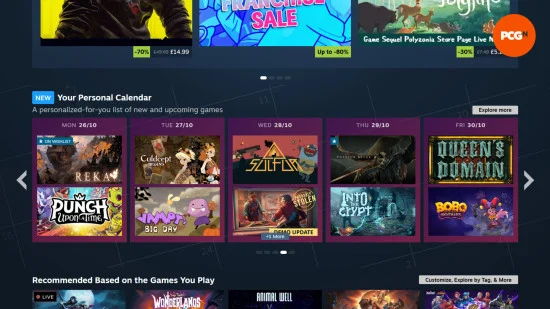
The calendar is designed to sit between two existing approaches to discovery on Steam: showing popular games and recommending games similar to what someone already plays. It highlights popular and niche titles that may suit a player and are either new or coming soon. A compact version appears on the store’s front page; opening the full view brings up more releases and tools for narrowing the list.

Playtime shapes recommendations
The system gives more weight to games a player spends substantial time with. A brief trial of a new title is unlikely to shift the recommendations much, Valve says, while putting many hours into a new favorite can have a greater effect. The algorithm updates each day, though Valve expects those daily adjustments to produce little visible change in most cases.
That gradual approach makes sense for a feature built around evolving tastes. A short experiment may be curiosity rather than a signal that someone wants more of the same. Longer playtime offers a stronger indication of interest, but even a favorite game can point in different directions: someone absorbed in a deckbuilding game might want another one, or might be ready for an entirely different genre.
Dates also affect what appears further ahead. Upcoming games can enter the calendar as their release dates are confirmed, giving the feature a longer view than a list focused only on what’s already available. That makes it useful both for browsing current releases and keeping an eye on what’s next, though the recommendations still depend on the player’s Steam activity and the information available about each game.
Variety is part of the pitch
Personalization brings an obvious risk: a recommendation system can keep serving more of what a player has already played, making it harder to stumble across something unfamiliar. Valve says it works to keep the calendar varied. Its reasoning is that each day is unlikely to bring a well-matched release in the same genre or theme as a player’s recent favorites. As a result, recommendations can span a broader range of games releasing on a given day.
Valve says the calendar’s suggestions come from its algorithm, without manual curation or paid influence. That design puts the emphasis on a balance between relevance and range: play history helps shape the selection, while the variety of releases gives the system opportunities to surface games outside a player’s usual habits. Whether that mix feels fresh will depend on the games arriving and how well the recommendations reflect each person’s interests.
The distinction around paid placement matters to how players interpret the feature. A personalized list can feel less useful if people suspect that a game appears because someone bought a spot. Valve says it doesn’t sell placement in the Personal Calendar or elsewhere on Steam. The calendar’s recommendations are therefore presented as discovery suggestions, rather than paid listings.
Filters put players in control
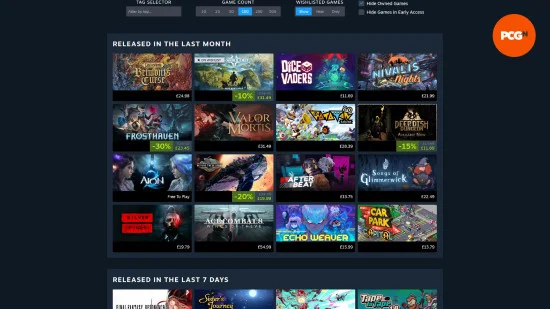
To open the full calendar, players can select “Explore More” in the top-right corner of the front-page view. From there, they can filter by tags, choose whether to include games on their Steam Wishlist, hide games they already own, and exclude titles still in early access. Those options let players tune the results around what they want to browse: unfamiliar genres, wishlist updates, or releases that have reached version 1.0.
The calendar also helped prompt a store feature that lets developers list the date their game is due to leave early access as version 1.0. That information can make the calendar more useful for players who prefer to wait for a game’s full release, and gives upcoming dates another role in store discovery.
Steam Labs remains the place to watch for other store experiments. Valve says its current work there includes ideas related to discoverability, video and machine learning, and it invites players to share feedback. For now, the Personal Calendar’s appeal will come down to a practical test: whether its blend of playtime signals, release timing and player-controlled filters helps people find something worth trying without narrowing their view of Steam’s catalog.
Players can use the calendar now, including those who didn’t try it during its Steam Labs testing period. Its strongest feature may be the combination of personalized suggestions with filters that put the player in charge of what appears. The next thing to watch is how well that balance holds as more release dates are added and the store continues to test new discovery tools.