Azeroth Professions and Factions in D&D: World of Warcraft
Choose a trade, build renown and find your place among Azeroth’s factions, from the Alliance and Horde to neutral orders.
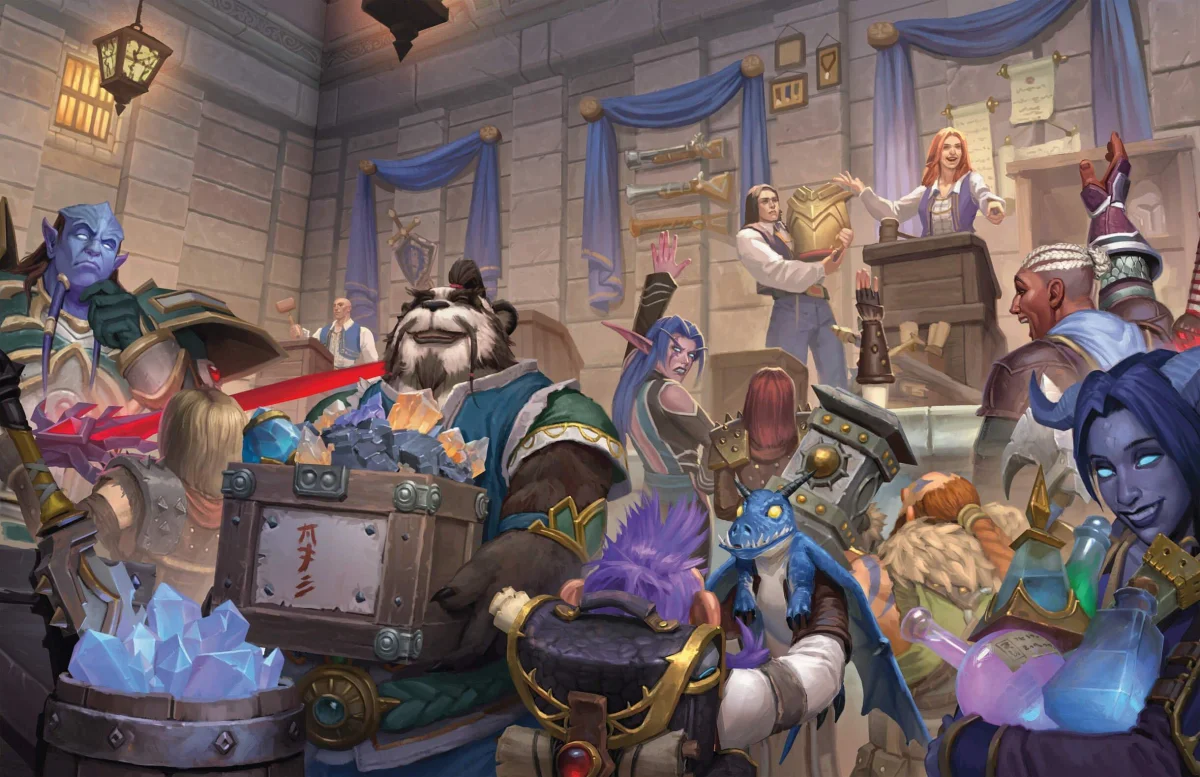
In D&D: World of Warcraft®, a character’s place in Azeroth can take shape through the work they do and the groups they serve. Professions turn skills and tool training into a way to gather materials and craft equipment or magic items; faction ties connect characters to the nations and organizations that shape life across the world. Together, those choices can give an adventuring party practical ways to support one another and plenty of reasons to explore.
The rules draw on existing D&D systems for foraging and crafting, with profession requirements tied to skills or tools. As characters gain levels and proficiency, they can pursue more valuable resources and make items of greater power. Characters can gather and produce for themselves, or split the work across a group: a miner can supply a blacksmith, while a skinner can provide materials for a leatherworker.
Gathering turns exploration into useful materials
Gathering professions use the foraging rules in the Dungeon Master’s Guide. Azeroth’s regions span recommended character levels 1–4 through endgame, above level 20. More challenging places can yield higher-quality finds, giving a gathering specialist a reason to travel beyond familiar territory.
- Archaeology requires proficiency in History. Characters search ancient ruins and assemble relics and magic items; the rarity of what they can assemble rises with their Proficiency Bonus.
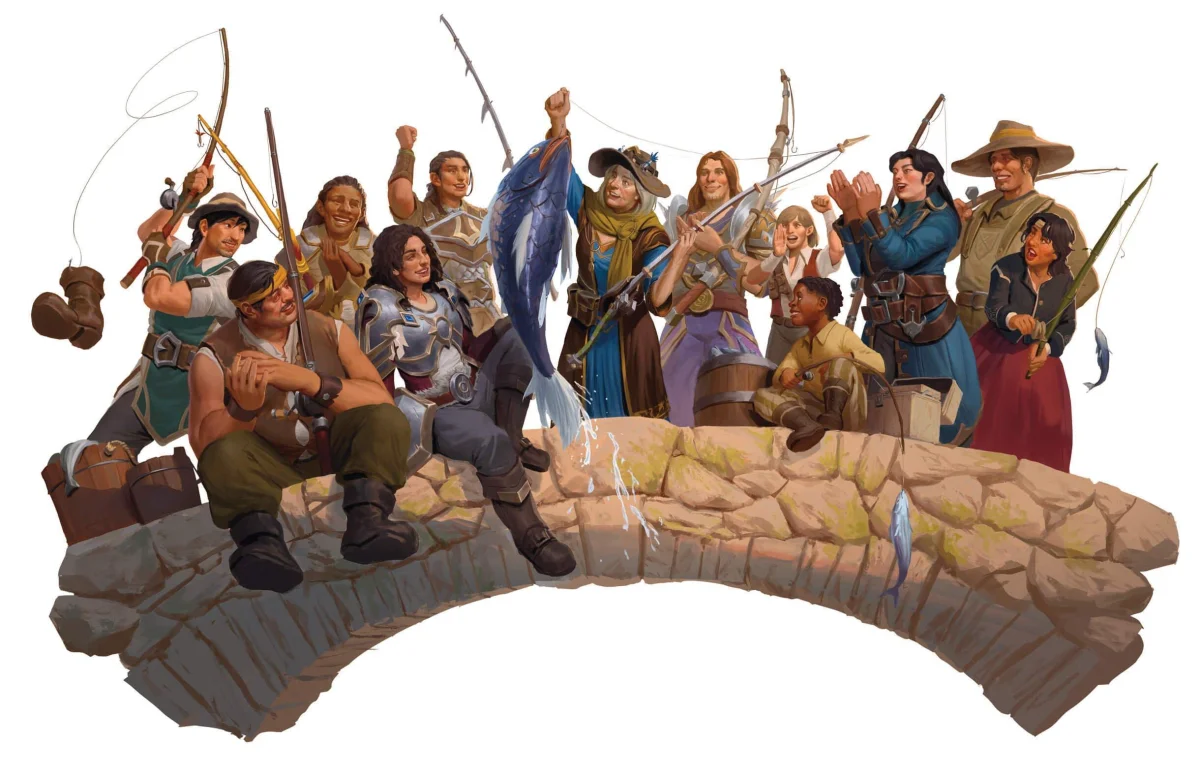
- Fishing has no proficiency prerequisite. It mainly provides food, though a natural 20 on a Wisdom (Survival) check while fishing can bring up a valuable item.
- Herbalism requires proficiency with a Herbalism Kit. Practitioners collect herbs, mushrooms and flowers used to make goods such as potions.
- Mining requires proficiency with Mason’s Tools. Miners collect minerals, ore, gems and stone, and can smelt metal into bars when they have access to a refinery or forge.
- Skinning requires proficiency with Leatherworker’s Tools. A character can skin Beasts and animal-like Monstrosities, then use those tools to determine whether the result is leather or hide.
Backgrounds can provide a useful starting point. Artisan grants proficiency with a set of Artisan’s Tools, which can meet the tool requirement for mining or skinning. Guide grants Survival proficiency, useful for fishing, while Hermit provides Herbalism Kit proficiency. Noble and Sage both grant History proficiency for archaeology, and suit characters drawn to old ruins and what they hold.
Production professions make the materials matter
Production builds on the crafting equipment rules in the Player’s Handbook and magic item crafting rules in the Dungeon Master’s Guide, with adjustments for Azeroth. Specific recipes and magically infused ingredients take the place of Arcana proficiency or prepared spells as the means to craft magic items. Recipes range from Common items for low-level characters to Legendary creations for high-level adventurers.
- Alchemy requires Alchemist’s Supplies or a Herbalism Kit. Alchemists make potions, dusts, perfumes and other alchemical goods; higher Proficiency Bonuses open access to potions of greater rarity.
- Blacksmithing requires Smith’s Tools or Mason’s Tools. It turns mined materials into metal and stone goods, sometimes incorporating leather or hide. Greater proficiency supports the crafting of more powerful magic weapons and armor.
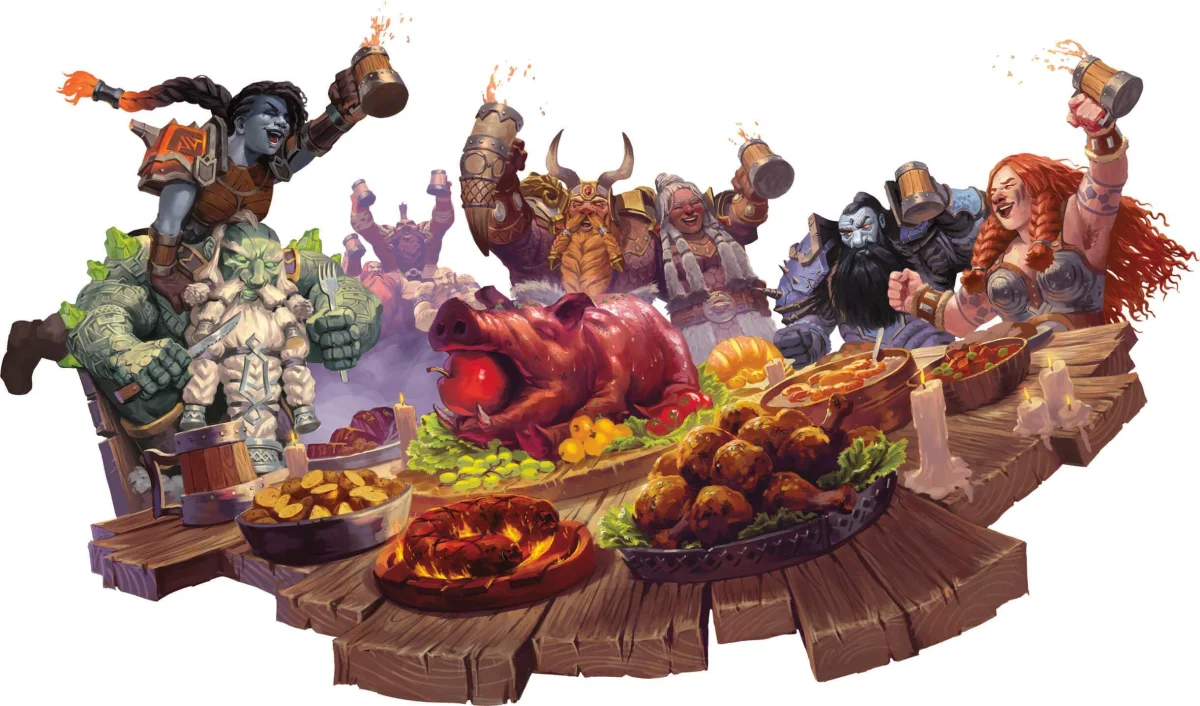
- Cooking requires Brewer’s Supplies or Cook’s Utensils. Cooks use ingredients to create ordinary or magical food. At sufficient skill, a character can reproduce the effects of the Heroes’ Feast spell with an hour of preparation and 1,000 GP of resources.
- Enchanting requires Carpenter’s Tools, Potter’s Tools or Woodcarver’s Tools. Reagents and those tools can produce magic items; the same tools can disenchant certain items to recover residue for future work.
- Engineering requires Tinker’s Tools. Engineers combine magic, science and gathered materials to build gadgets, many of them magically infused.
- Inscription requires Calligrapher’s Supplies, Cartographer’s Tools or Painter’s Supplies. Inscribers make herb-infused pigments and inks for spellcasting foci, card decks, and, as their skill grows, ability-boosting tomes and manuals. The profession also offers the Inscription Adept General feat, which lets characters reproduce certain spell effects through writing.
- Jewelcrafting requires Jeweler’s Tools or Glassblower’s Tools. With metals and gems, jewelcrafters make jewelry and related items.
- Leatherworking requires Leatherworker’s Tools or Cobbler’s Tools. Leather and hides become ordinary or magical armor and similar goods.
- Tailoring requires Weaver’s Tools. Cloth reagents become everyday items and magic goods such as bags, cloaks and robes.
Artisan is a natural fit for production: its Crafter Origin feat and choice of tool proficiency can satisfy a profession’s prerequisite, while giving the character a work history to build on. Hermit pairs well with alchemy, especially for someone who learned to make potions from local plants. Scribe and Sage both suit inscription through a connection to Calligrapher’s Supplies and the study and copying of knowledge.
Faction ties give characters a place in Azeroth
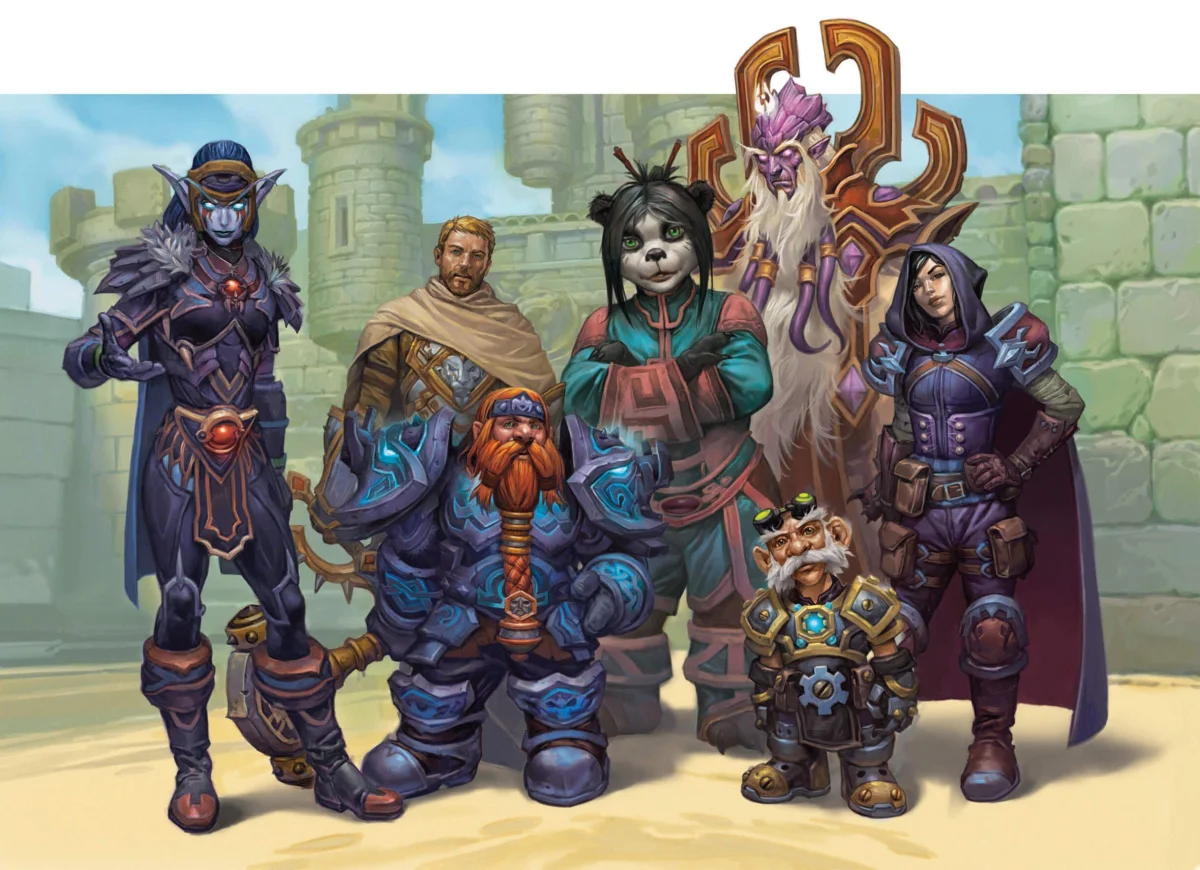
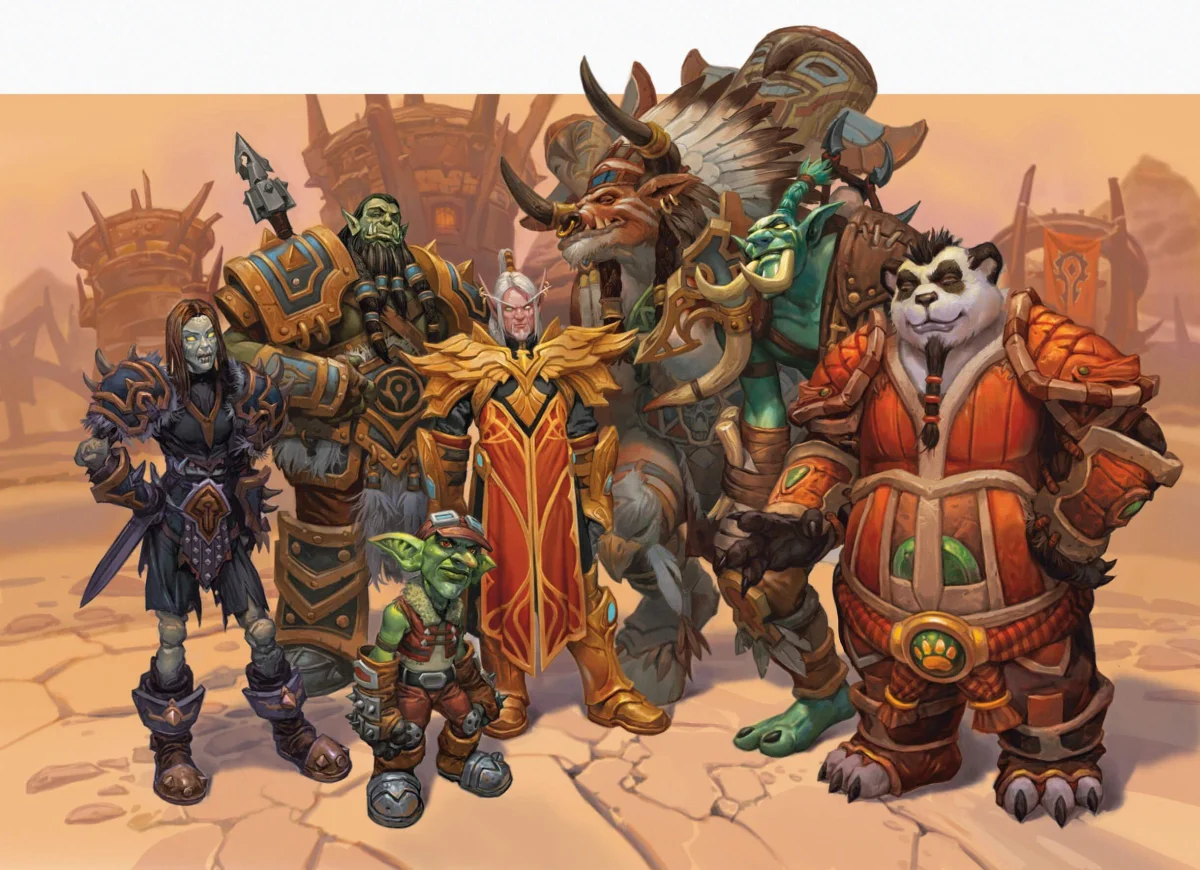
Azeroth’s factions include nations, organizations, cartels and pacts. Working with them can build a character’s reputation and bring tangible or less material rewards. The Alliance and Horde have shaped the world’s recent history through four wars, beginning with the opening of the Dark Portal. After almost thirty-five years of conflict that has waxed and waned, the two now maintain a fragile truce.
The Alliance brings together peoples who value traditions of nobility, honor, faith, justice and sacrifice. Its member cultures contribute technical, arcane and spiritual knowledge toward a shared vision of a peaceful and just world. The coalition’s leadership rests on its members’ collective will. Stormwind’s high king or other leader has traditionally served as its commander, while an Alliance council brings the faction’s leaders together.
- Darnassus represents night elves across Azeroth, as well as the void elves based in Telogrus Rift.
- Exodar is the home faction of the draenei who arrived aboard the vessel of the same name.
- Gilneas encompasses the nation and its people, including its worgen. Night elf druids taught the Gilnean worgen the Ritual of Balance to help them control their transformations.
- Gnomeregan includes gnomes and mechagnomes. Before Gnomeregan was reclaimed, the group was called Gnomeregan Exiles.
- Ironforge represents dwarves who recognize the Council of Three Hammers, formed from the Bronzebeard, Dark Iron and Wildhammer clans.
- Obsidian Warders are a dracthyr weyrn charged with protecting the black dragonflight’s allies and strongholds. After traveling to Stormwind to warn of danger, they joined the Alliance.
- Stormwind encompasses the surviving human kingdoms, including Kul Tiras, Dalaran and Stromgarde. It remains Azeroth’s strongest human nation.
- Tushui pandaren follow a path of meditation and careful discernment, principles that drew them to the Alliance.
The Horde is a looser union of nations facing a hostile world. Strength and honor matter to its focused, fierce members, who also have to keep aggression in check. Its ideals are unity, freedom and hope. A single warchief led the Horde from its founding through the Fourth War; a council of the member factions’ leaders governs it now.
- Bilgewater Cartel represents the goblins who joined the Horde. It’s one of four major goblin cartels, known for what it calls “the classical goblin arts: building things and blowing them up.”
- Dark Talons are a dracthyr weyrn trained as an elite destructive force and allied with the Horde, feared by the black dragonflight’s enemies.
- Darkspear Tribe was the first troll group to join the Horde. When the Zandalari Empire joined, it aligned with the Darkspears as part of a united troll faction.
- Huojin pandaren follow a philosophy of direct action, drawing them to the Horde’s practical outlook.
- Orgrimmar is the orcs’ capital and is closely identified with the Horde; many orcs consider themselves citizens of the city.
- Silvermoon City represents the blood elf kingdom of Quel’Thalas. The nightborne elves of Suramar are also included.
- Thunder Bluff represents the tauren tribes that have united with the Horde.
- Undercity encompasses the Forsaken who broke free of the Lich King and joined the Horde. After Sylvanas Windrunner became warchief, the Desolate Council was formed to govern the Forsaken.
Neutral orders open other paths
Characters aren’t limited to the two major factions. Several groups welcome members from both sides, while others pursue their own work across Azeroth.
- Argent Dawn is a knightly order devoted to defending Azeroth from the Burning Legion, the Scourge and other world-threatening forces. It stays outside the Alliance–Horde conflict and calls both sides allies in that cause. Its headquarters is Light’s Hope Chapel in the Eastern Plaguelands.
- Cenarion Circle, named for Cenarius, watches over Azeroth’s druids and protects nature’s balance. Since the end of the Third War, it has accepted druids from both major factions.
- Earthen Ring brings together powerful shamans to preserve elemental balance. It opposes destructive forces such as the Twilight’s Hammer cult and the Burning Legion, and maintains neutrality in mortal conflicts.
- Both focus on archaeology and history. The Dragon Isles’ return and the discovery of Khaz Algar helped end their long rivalry, and they now mount joint expeditions.
- Kirin Tor began as a secretive mages’ guild in the Empire of Arathor. After that empire fell, Dalaran became a nation, with the Kirin Tor’s Council of Six as its rulers. The city was destroyed during the Third War, rebuilt as a flying island and ultimately fell above the Isle of Dorn in Khaz Algar. Its survivors are in Dornogal, coordinating Azeroth’s magical defenses.
- Steamwheedle Cartel is one of the largest and wealthiest goblin cartels. It has stayed neutral between the Alliance and Horde since the Second War and operates across many trades, with a specialty in premium alchemy. Its business includes potions, fuels, poisons and industrial chemicals—“liquid assets,” in goblin parlance.
- Valdrakken Accord unites dragonkind to protect the Dragon Isles and Azeroth under the ancient charge given to the five Dragon Aspects. Its mission now reaches beyond the five flights.
Professions give adventurers ways to contribute between battles; faction ties place them inside Azeroth’s shifting alliances and shared causes. Those choices can lead into conflicts with the Burning Legion, corrupted dragons or the Old Gods. The character’s trade and loyalties offer a starting point, while the wider world supplies the trouble.
Related reading: Become a Champion of Azeroth with these 13 World of Warcraft Classes by Damen Cook; Meet the Five Dragonflights of D&D: World of Warcraft by Riley Silverman; and From Kalimdor to Northrend: Chart Your Own Path Through the Regions of Azeroth by Riley Silverman.