Phantom Blade Zero Cell Key Location: Find It in Weeping Creek Valley
Find the Cell Key above a wooden house in Weeping Creek Valley, then return to the outpost cell for a Blackstone Fragment.
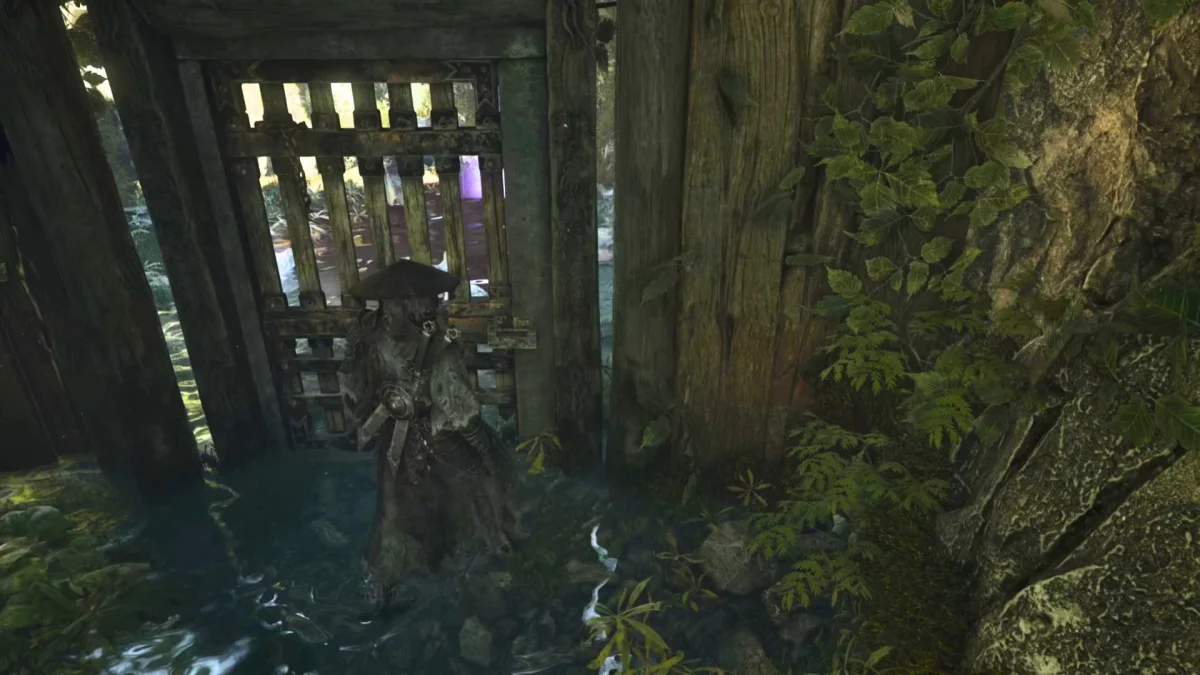
The Cell Key in Phantom Blade Zero teaches an early lesson about how the game expects you to move through its spaces. A locked door can pull you away from the route you’re following, then send you back with a reward that makes the detour worthwhile. The key is close to the cell in the broader outpost area, but it isn’t sitting beside the door; you’ll need to follow the path past several landmarks and climb onto the roof of a wooden house.

This is a modest navigation puzzle, but it asks you to do more than scan the ground around the lock. The useful clues are the route’s fixed landmarks: the outpost bell, the archway, and the house. If you’re keeping those in mind, the search becomes a sequence of clear steps instead of a sweep through every blocked path.
Reach the outpost bell
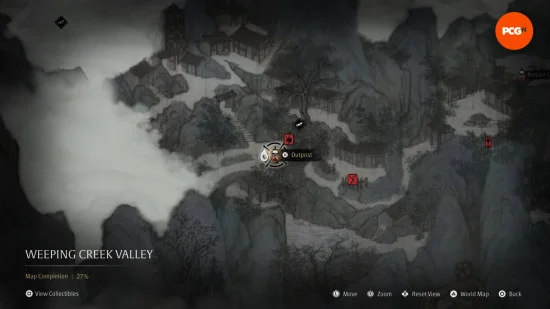
After finding the cell door, continue through Weeping Creek Valley. An Order member lets you pass through a gate into the outpost, giving you a route into the area where the key can be found. Keep following the path onward. You’ll meet a wise archer and learn how to upgrade your weapons for the first time, an introduction that gives the detour some useful context: this stretch of the game is teaching you to notice both routes and rewards.
Continue until you reach the Outpost bell. Treat it as your main navigation marker, since the paths around it are easy to confuse if you’re focused only on the obstacles. Two guards block the route to the left, and chains prevent you from taking the path on the right. The stairs leading north, through an archway, provide the way onward.
Those blocked routes help define the choice in front of you: don’t spend time trying to force a way past the guards or chains when the stairs offer a clear route. That kind of visual guidance is useful in an area with several turns, especially when you’re carrying a specific objective from an earlier room. Here's the thing: the bell is a checkpoint for your memory as much as a landmark in the world.
Climb above the wooden house
Once you’ve passed through the arch, take the path to the right and climb the next set of stairs. They lead to a wooden house, which is the next important landmark. Look for another staircase on the house’s right side and follow it upward, continuing until you reach the top of the building. The key isn’t along the main path at ground level, so keep climbing rather than turning back when you reach the house.
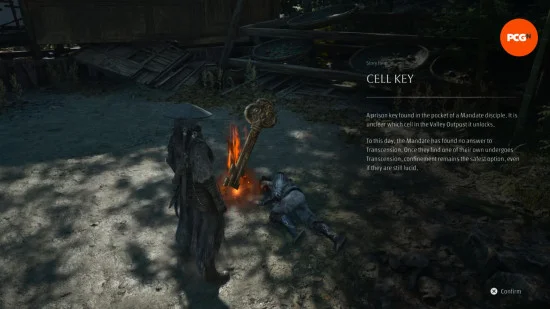
A glowing orange orb is waiting on the rooftop. Interact with it to collect the Cell Key and add it to your inventory. The sequence is simple once you know it, but the roof is easy to miss if you’re following the road and watching only for doors or gates. Use the archway and the wooden house as checkpoints: north through the arch, right up the path, then up beside the house.
That route is short enough to remember, yet it also shows how the game uses vertical space to tuck away an objective. The key’s location doesn’t require a new mechanic; it asks you to read the surrounding architecture and follow stairs that lead away from the obvious route. (And this is the part most people overlook.) The rooftop orb is a reward for looking above the path, not for searching deeper into the outpost.
Return for the Blackstone Fragment
With the key collected, head back to the outpost entrance and unlock the cell door. Inside, pick up the purple orb to receive your first Blackstone Fragment. The key and the fragment serve different purposes in this small loop: one gets you through a locked door, while the other is the reward waiting on the other side.
Blackstone Fragments appear throughout the game, and collecting four increases attack and guard-break by 10%. That gives the cell a clear payoff beyond opening another room. The upgrade is tied to collecting a set number of fragments, so this first one also introduces a longer-running reward structure. You won’t see the full benefit from this single pickup alone, but you’ll know what to look for as you explore later areas.
The detour is more than a key hunt, then. It teaches you to remember a locked door, look for a route to an item elsewhere, and come back when you have what you need. That pattern is familiar in games built around exploration, but its value depends on whether the landmarks are legible and the return trip feels manageable. Here, the bell, archway, and house make the route traceable without turning the search into guesswork.
Why this detour matters
This is more significant than it looks. The cell is an early, compact example of how Phantom Blade Zero connects navigation to progression: a side path leads to a key, and the key opens a room with a resource that contributes to a later upgrade. It’s a small chain, but it encourages you to keep blocked routes in mind instead of treating every locked door as a dead end.
If you’re working through the outpost, the practical takeaway is straightforward: note the cell, continue toward the bell, and follow the route above the wooden house before returning. The game’s landmarks do most of the work once you know which direction to take. And yet, the reward also asks you to think beyond the immediate room. One fragment won’t complete the set; it gives you an early reason to pay attention to similar pickups as the adventure continues.
A key, a short return trip, and a first upgrade item. That’s the whole loop, and it’s a useful one to recognize early.